 0
0


Download game Daily Lives of my Countryside [v0.3.5.2] [APK]
IMAGE GAME Daily Lives of my Countryside [v0.3.5.2] [APK]
![Daily Lives of my Countryside [v0.3.5.2] [APK]](https://i0.wp.com/gamecax.com/wp-content/uploads/2020/03/daily-lives-of-my-countryside.jpg?fit=1920%2C480&quality=95&strip=all&ssl=1)

Details GameDaily Lives of my Countryside [v0.3.5.2] [APK]
 Developer: Milda Sento
 Version: 0.3.5.2
 Operating system: Windows, Linux, Android
 Update date: 28/08/2026
 Tags: 2D game, 2DCG Adult Games, Animated, Big ass, Dating sim, Humor, Male Protagonist Adult Games, Voyeurism Categories: Free Sex Games APK for Android – Best Adult Mobile Games (2026), Free Sex Games for Linux – Download Adult Games Ubuntu, Free Sex Games for PC – Download Adult Games for Windows
About Game Daily Lives of my Countryside [v0.3.5.2] [APK]
Daily Lives of my Countryside [v0.3.5.2] [Milda Sento]
Daily Lives of My Countryside is a countryside sandbox dating sim developed by Milda Sento and built with RPG Maker. Rather than following a strictly linear visual-novel structure, the game places the player in a small rural community where exploration, daily schedules, character relationships, events, and gradual progression determine how the experience unfolds.
The story follows Callum, who returns to the countryside where he was born and begins living a quieter rural life. What initially appears to be a simple return home gradually expands as Callum explores the surrounding community, meets its residents, and becomes involved in their individual storylines.
Two of the most important characters at the beginning are Daisy and Anna, who help establish Callum’s new daily routine and provide some of the earliest character progression. The cast later expands considerably beyond the starting household, with characters such as Mrs. Emmi, Kate, Felix, Joyce, Nina, Mabel, Pixie, and others becoming connected to different locations and progression paths.
The countryside itself is an important part of the game rather than merely a background for dialogue. Characters follow schedules, events can depend on the time of day, and progression frequently requires visiting the correct place after meeting earlier conditions.
This structure makes Daily Lives of My Countryside closer to a character-driven sandbox than a conventional visual novel. Players are expected to explore, learn character routines, increase relationship progress, complete objectives, and return to locations when new interactions become available.
The in-game Phone is particularly important for navigating this structure. It provides information about characters, available events, and schedules, helping players determine where progression may be available instead of searching the entire map without direction.
Over time, Milda Sento has also expanded the game’s quality-of-life systems with improvements to its map, interface, story flow, and autosave behavior. These additions are especially valuable in a sandbox because they reduce unnecessary repetition and make a growing number of character routes easier to manage.
Visually, Daily Lives of My Countryside uses detailed 2D artwork and animation rather than the 3D-rendered presentation common to many adult sandbox games. This gives the project a recognizable visual identity and makes its rural environments and character designs an important part of the overall appeal.
Daily Lives of My Countryside remains an actively developed project. For that reason, this page focuses on its permanent identity — Callum, the countryside setting, sandbox progression, character schedules, relationships, exploration, and RPG Maker gameplay — rather than tying evergreen SEO content to any particular release number.
Players looking for more desktop titles can also browse the Windows Adult Games available on GameCax.
Daily Lives of My Countryside Review
A Countryside Setting That Actually Influences Gameplay
The rural setting is one of the strongest parts of Daily Lives of My Countryside because it is connected directly to how the game works. Instead of placing characters inside a series of disconnected menus, Milda Sento builds progression around a small community where locations, schedules, and routines matter.
The result is a slower and more exploratory experience. Learning where people spend their time becomes part of understanding the game itself.
Callum Provides a Simple Starting Point
Callum’s return to the countryside gives the game an uncomplicated premise that works well for a sandbox. The story does not need a lengthy introduction before players can begin exploring the community and interacting with its residents.
His role also provides a natural reason to rediscover locations and gradually become familiar with people who already have their own routines.
Character Schedules Are a Core Progression System
One of the most important differences between Daily Lives of My Countryside and a linear visual novel is that characters are not permanently waiting in one location.
Different people can appear in different places depending on the time and their current progression state. Understanding these schedules is therefore part of solving the sandbox.
Time and Location Work Together
Knowing which character you want to progress is only part of the solution. Players may also need to know when and where the relevant interaction occurs.
This creates a progression loop built around checking schedules, moving through the countryside, advancing time, and returning when the necessary conditions are satisfied.
The Phone Solves One of the Biggest Sandbox Problems
Sandbox games can become frustrating when players have no idea where the next event is located. Daily Lives of My Countryside addresses this through its Phone system.
Character information, available events, and schedules can be checked through the Phone, giving players an in-game source of guidance rather than forcing them to rely immediately on an external walkthrough.
Relationships Function as Progression
Character development is tied closely to relationship progress. Advancing individual characters can open additional interactions and story content, making relationships part of the game’s progression system rather than isolated optional dialogue.
This also means that players who concentrate entirely on one character may leave significant parts of the wider countryside unexplored.
The Cast Has Expanded Well Beyond the Starting Household
Daisy and Anna are important early characters, but Daily Lives of My Countryside gradually expands into a much larger community.
Characters such as Mrs. Emmi, Kate, Felix, Joyce, Nina, Mabel, Pixie, and others create separate progression objectives and give players reasons to explore different parts of the map.
Characters Are Better Treated as Individual Routes
Because different characters have their own schedules and progression requirements, the game benefits from thinking about each major character as a separate route within the larger sandbox.
This is also why character-specific guides are likely to be more useful than one enormous walkthrough that mixes every event together.
Exploration Has a Practical Purpose
Moving around the map is not only about discovering scenery. New locations can introduce characters, objectives, and progression opportunities.
Revisiting locations after advancing another storyline can also be important because the sandbox changes as different requirements are completed.
The Game Has Become Less Dependent on Affection Grinding
An important design improvement is Milda Sento’s effort to smooth story progression and reduce unnecessary affection grinding. This is particularly valuable because relationship-based sandboxes can easily become repetitive when advancement depends too heavily on repeating the same action.
Reducing that friction allows players to spend more time discovering new events instead of repeatedly farming a relationship value.
The Map Helps Manage a Growing World
As the cast and available locations expand, navigation becomes increasingly important. A map and improved interface make the larger sandbox easier to understand and reduce the amount of time spent moving without a clear objective.
This is a meaningful quality-of-life improvement rather than a purely cosmetic addition.
Autosave Makes Sandbox Progression Safer
Automatic saving provides another useful safeguard in a game where players may spend significant time advancing several character routes between manual saves.
Manual saves are still recommended before major progression changes, but autosave reduces the risk of losing an entire sequence of ordinary exploration.
RPG Maker Is Used for Sandbox Gameplay
Daily Lives of My Countryside is built with RPG Maker, but it should not be confused with a traditional combat-heavy JRPG. The engine is primarily used to create the explorable map, character movement, event triggers, schedules, inventory-style interfaces, and other systems supporting the countryside sandbox.
This engine context is important because simply labeling the game “RPGM” tells players very little about what they actually do.
Gameplay Is More About Routine Than Combat
The central challenge is learning how the countryside works rather than defeating increasingly powerful enemies. Character routines, event requirements, exploration, relationship progression, and time management are considerably more important to the experience.
Players looking specifically for statistics-heavy combat should therefore approach the RPG Maker label with the correct expectations.
Mini-Games Add Variety
The sandbox also contains smaller interactive activities that provide breaks from character conversations and routine exploration. As development has continued, Milda Sento has experimented with additional activities and mechanics rather than restricting every interaction to dialogue.
These systems help the countryside feel more like a playable environment and less like a collection of character menus.
The Rural Routine Creates a Distinct Pace
Daily Lives of My Countryside deliberately feels slower than a tightly scripted visual novel. Players wake up, move between locations, check characters, advance time, and gradually discover what is happening around them.
For players who enjoy sandbox discovery, this routine creates immersion. For players who want constant story progression, it can occasionally feel slower than necessary.
The Phone Should Be Checked Before Using a Walkthrough
Because the Phone can provide information about character events and schedules, players who become stuck should check it before immediately searching for an external solution.
This preserves more of the intended exploration while still giving enough direction to prevent completely blind progression.
A Walkthrough Becomes Useful for Specific Trigger Conditions
The Phone cannot eliminate every source of confusion. With many characters, locations, schedules, and prerequisite events, it is still possible to understand where someone should appear without knowing why their next event has not triggered.
This is where a walkthrough provides genuine value: explaining dependencies between earlier events rather than merely reproducing the schedule already available inside the game.
Character Guides Have Strong Search Intent
Daily Lives of My Countryside is particularly suitable for character-specific guides because players often search for the exact person whose progression has become stuck.
Guides for Daisy, Anna, Mrs. Emmi, Kate, Joyce, Nina, Mabel, Pixie, and other important characters can explain schedules, prerequisites, locations, and route progression without forcing readers to navigate an oversized general walkthrough.
A Schedule Guide Is Another Natural Content Cluster
Character schedules are important enough to justify their own resource. Instead of repeatedly explaining every timetable inside individual articles, GameCax could maintain a central Daily Lives of My Countryside character schedule guide and connect individual character walkthroughs back to it.
This creates a useful knowledge structure around one of the game’s defining mechanics.
Save Compatibility Deserves Its Own Attention
Sandbox games with long character routes make save continuity particularly important. Milda Sento has previously instructed players updating the PC release to copy the complete save folder from the older installation into the appropriate folder of the newer game.
Players with extensive progression should therefore back up the entire save directory rather than assuming every release will automatically detect saves from a separate extracted folder.
Old Saves Can Complicate Progression
Long-running sandbox development creates another potential problem: a save can contain progression variables established before later changes to story flow or character requirements.
If a particular route behaves unexpectedly after several major updates, players should distinguish between an actual progression requirement and a possible compatibility problem before spending hours searching for an event.
The 2D Presentation Gives the Game a Strong Identity
Daily Lives of My Countryside stands apart visually from the large number of adult sandbox games built around realistic 3D renders. Its illustrated 2D characters and animated presentation give it a more immediately recognizable style.
The visual approach also fits the relaxed countryside setting particularly well because environments and characters can maintain a consistent illustrated aesthetic.
Animations Are an Important Part of the Presentation
Milda Sento continues to spend substantial development time drawing and animating character content. That emphasis helps explain why individual updates may focus heavily on a smaller group of characters rather than rapidly adding large amounts of lightly developed content.
The trade-off is slower expansion, but the benefit is a more deliberate visual presentation.
Development Remains Character-Focused
New content tends to expand individual character storylines, interactions, or related systems rather than replacing the basic structure of the game.
This makes the core description of Daily Lives of My Countryside relatively stable even while development continues: it remains a countryside sandbox centered on Callum, exploration, schedules, and character progression.
Strengths
- Distinct countryside sandbox setting.
- Detailed hand-drawn 2D presentation.
- Large and expanding character roster.
- Character schedules make time and location meaningful.
- Phone system provides useful in-game progression guidance.
- Exploration is connected to character and story progression.
- Individual character routes provide substantial long-term content.
- Improved story flow reduces unnecessary affection grinding.
- Map and interface improvements make the growing sandbox easier to navigate.
- Mini-games and side activities add gameplay variety.
- Strong potential for character-specific walkthrough content.
Weaknesses
- Progression can become confusing when several prerequisites overlap.
- Character schedules require players to pay attention to both time and location.
- A large cast makes complete route tracking increasingly complicated.
- Older saves can occasionally create uncertainty when progression systems change.
- Players expecting a linear visual novel may find the sandbox pacing slow.
- Players expecting a traditional RPG may find the RPG Maker label misleading because combat is not the primary focus.
- Ongoing development means some character storylines remain incomplete.
Who Should Play Daily Lives of My Countryside?
Daily Lives of My Countryside is best suited to players who enjoy character-driven sandbox games where discovering routines and gradually unlocking individual storylines is part of the experience. It is especially appealing if you prefer hand-drawn 2D artwork, rural settings, large casts, exploration, and relationship progression over linear visual novels.
Players who enjoy learning character schedules and solving progression requirements will probably get more from the game than those looking for a completely guided story. Conversely, players who dislike revisiting locations or waiting for the correct time of day may find the sandbox structure less convenient.
Final Verdict
Daily Lives of My Countryside succeeds because its countryside setting is connected directly to its gameplay. The rural community is not simply scenery behind a sequence of dialogue choices: characters have schedules, locations matter, time influences availability, and progression encourages players to learn how the community operates.
The Phone system is particularly important because it prevents this structure from becoming completely directionless. Combined with the map and improved story flow, it gives players enough information to investigate progression naturally while leaving room for exploration.
The large cast also gives the game substantial content-cluster potential. Daisy, Anna, Mrs. Emmi, Kate, Joyce, Nina, Mabel, Pixie, and other characters can each generate specific schedule, event, and walkthrough intent without requiring the main game page to answer every possible progression question.
Milda Sento’s illustrated 2D presentation gives the project another clear identity. In a niche filled with 3D-rendered visual novels and sandboxes, Daily Lives of My Countryside is immediately recognizable and its slower rural setting complements that visual direction.
Its main weakness is also a consequence of its greatest strength. A sandbox with many characters, schedules, locations, and prerequisites can become confusing as it expands. Players who become stuck may eventually require more detailed route guidance than the in-game Phone can provide.
For players who enjoy discovering character routines and gradually opening a larger countryside sandbox, however, Daily Lives of My Countryside offers considerably more interaction than a conventional linear visual novel.
| Category | Score |
|---|---|
| Sandbox Gameplay | 9.1 / 10 |
| Characters | 9.0 / 10 |
| 2D Visuals | 9.3 / 10 |
| Exploration | 8.7 / 10 |
| Progression Systems | 8.6 / 10 |
| Quality of Life | 8.7 / 10 |
| Gameplay Variety | 8.6 / 10 |
| Accessibility | 8.1 / 10 |
| Overall | 8.8 / 10 |
Game Relationships & Explore More
Explore More Games from Milda Sento
Daily Lives of My Countryside is currently the main publicly identifiable project associated with Milda Sento. Because no clearly verified second title from the same developer is available, this page should build its internal knowledge graph around the game’s characters, schedules, progression systems, and guides rather than forcing unrelated same-developer recommendations.
Explore the Character Network
The strongest relationships inside Daily Lives of My Countryside are between the main game and its individual character routes. Characters such as Daisy, Anna, Mrs. Emmi, Kate, Joyce, Nina, Mabel, and Pixie can each support their own progression and schedule content.
This makes character-specific guides especially valuable because players often become stuck on one person rather than on the entire game.
Use the Phone Before Searching for a Walkthrough
The in-game Phone provides useful information about character events and schedules. Check it first when you are unsure where to go or which character has available progression.
An external walkthrough becomes most useful when the Phone shows a character but does not explain an earlier prerequisite, affection requirement, or event dependency preventing the next stage from triggering.
Build a Character Schedule Knowledge Hub
Character schedules are important enough to justify a dedicated guide. A central schedule page can explain where major characters appear at different times, while individual character guides can focus on progression requirements and event chains.
Use Character Guides for Route-Specific Progression
Instead of one oversized walkthrough covering every resident, GameCax can connect Daily Lives of My Countryside to individual guides for characters such as Daisy and Anna. This creates a clearer structure for players and a stronger internal entity graph for search engines.
Explore More PC Games
Daily Lives of My Countryside is primarily distributed as a desktop game. Browse more Windows Adult Games available on GameCax.
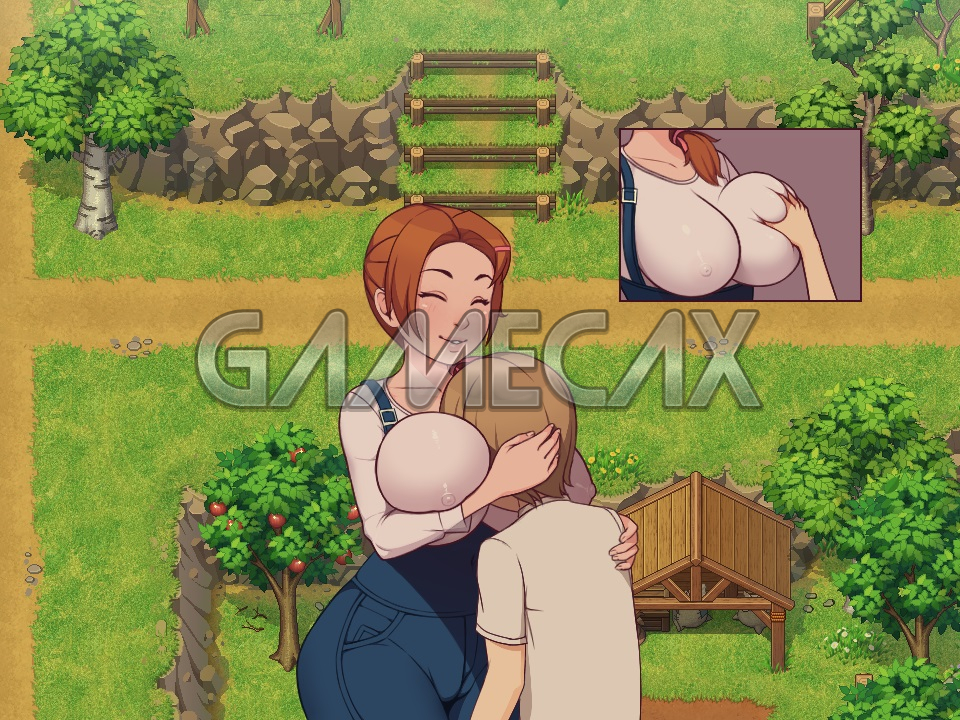
Image Game Daily Lives of my Countryside [v0.3.5.2] [APK]



Other Information Game Daily Lives of my Countryside [v0.3.5.2] [APK]
FAQ:
Installation:
ChangeLog:
Note:
Video Game Daily Lives of my Countryside [v0.3.5.2] [APK]
There are currently no YouTube videos for this game.
Link Download Game Daily Lives of my Countryside [v0.3.5.2] [APK]
 OS: Windows
 OS: Android
 OS: Linux
Comment game Daily Lives of my Countryside [v0.3.5.2] [APK]


![Waifu Academy [v0.13.5] [APK]](https://i0.wp.com/gamecax.com/wp-content/uploads/2024/01/waifu-academy-1-1.jpg?fit=1600%2C400&quality=95&strip=all&ssl=1)
![The Royals [v0.2] [Master Bunny]](https://i0.wp.com/gamecax.com/wp-content/uploads/2025/06/the-royals-1.jpg?fit=1920%2C1080&quality=95&strip=all&ssl=1)
![Bobby’s Memoirs of Depravity [v0.15.61] [APK]](https://i0.wp.com/gamecax.com/wp-content/uploads/2025/04/3312966_bobby_memoirs_of_depravity-1.jpeg?fit=1280%2C364&quality=95&strip=all&ssl=1)
![Red Sakura Mansion 2 [v2.26.3] [APK]](https://i0.wp.com/gamecax.com/wp-content/uploads/2025/06/red-sakura-mansion-2-1.jpg?fit=1920%2C1080&quality=95&strip=all&ssl=1)