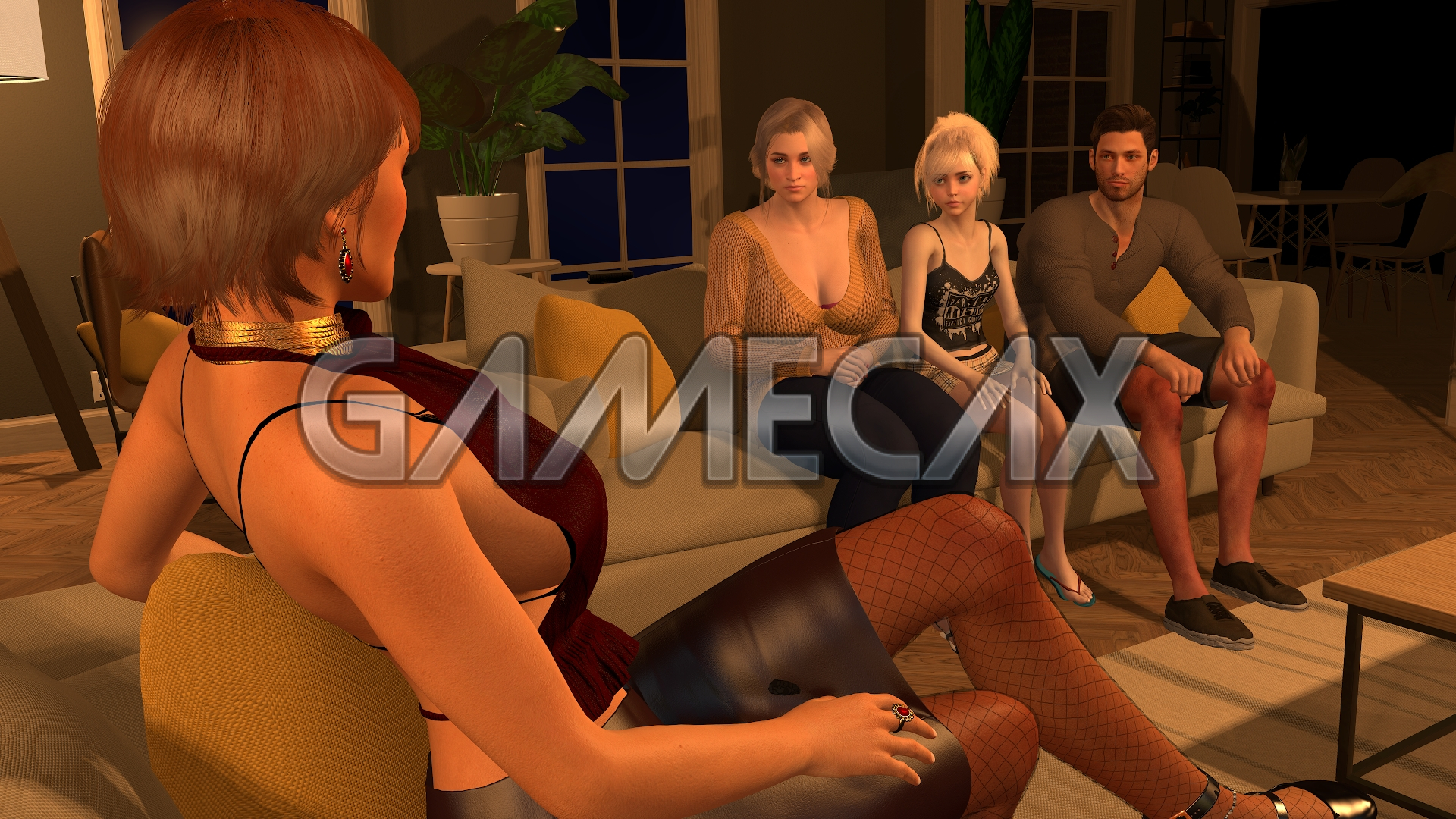


Download game In Her Service [v0.95.40 Public] [APK]
IMAGE GAME In Her Service [v0.95.40 Public] [APK]
Details GameIn Her Service [v0.95.40 Public] [APK]
Developer: Blue Factory Games
Version: 0.95.40 Public
Operating system: Windows, Linux Mac, Android
Update date: 06/09/2026

About Game In Her Service [v0.95.40 Public] [APK]
- In Her Service [v0.95.40 Public] [Blue Factory Games]
- In Her Service Review
- Jack and Sylvia Are the Center of the Story
- The Mansion Creates a Controlled Narrative Environment
- Talia Godroy Drives Much of the Initial Conflict
- Choices Define What Kind of Couple Jack and Sylvia Become
- Jack and Sylvia Can Develop Together or Separately
- Relationship States Matter More Than One Perfect Answer
- Choices Have Delayed Consequences
- Different Routes Can Change the Tone of the Story
- Character-Specific Decisions Feed Into the Larger Relationship
- The Game Rewards Consistent Roleplaying
- There Is No Single Intended Relationship Path
- The FlowChart Is One of the Most Useful Features
- The FlowChart Helps Reveal Story Dependencies
- Replaying Events Makes Route Exploration Easier
- Manual Saves Are Still Important
- Multiple Endings Give Choices a Long-Term Purpose
- Ending Routes Reflect Earlier Character Development
- One Playthrough Is Not Designed to Show Everything
- Alternative Routes Provide Genuine Replay Value
- Visual Presentation Is a Major Part of the Experience
- The Cinematic Approach Fits the Linear Event Structure
- The Story Can Spend More Time on Character Drama
- The Branching Structure Can Become Complex
- A Walkthrough Should Be Route-Based, Not Merely Chronological
- Choice Guides Should Explain Consequences
- An Ending Guide Has Strong Completion Value
- Pros
- Cons
- Final Verdict
- Explore More About In Her Service
- How Progression Works in In Her Service
- Jack and Sylvia’s Relationship Is the Main Progression System
- Choices Gradually Define the Relationship
- One Choice Does Not Always Define a Route
- Choices Can Have Delayed Consequences
- Character States Help Explain Different Playthroughs
- Talia Godroy Is an Important Catalyst
- Other Characters Can Influence the Central Relationship
- Routes Represent Different Relationship Directions
- There Is No Universal Best Choice
- Consistent Decisions Make Routes Easier to Understand
- The FlowChart Is Essential for Route Exploration
- How to Read the FlowChart
- Use the FlowChart to Find Branch Points
- Missing FlowChart Events Are Useful Clues
- How to Investigate a Missing Event
- Do Not Assume Every Missing Event Can Be Unlocked on the Same Route
- Replay Discovered Events to Understand Context
- Manual Saves Still Matter Even With the FlowChart
- Create Saves Before Relationship Turning Points
- Keep Separate Saves for Different Route Directions
- How to Compare Two Choices
- Immediate Reactions Do Not Reveal Every Consequence
- How to Identify a Critical Choice
- How to Troubleshoot a Route That Stops Progressing
- How to Troubleshoot a Different Scene
- How to Troubleshoot a Missing Choice
- How to Troubleshoot a Missing Ending
- Multiple Endings Reward Planned Replay
- An Ending Guide Should Work Backward
- Route Guides Should Explain Consequences, Not Only Answers
- Character Guides Should Connect Back to Jack and Sylvia
- A Completion Guide Should Combine the FlowChart and Saves
- How to Approach a First Playthrough
- How to Approach a Completion Playthrough
- In Her Service Walkthrough
In Her Service [v0.95.40 Public] [Blue Factory Games]
In a modern world where nobility exists , Sylvia and Jack, a couple deeply in love, stand before the doors to the mistress Talia’s mansion. The doors before them represent not only their new home but also an uncertain future with their new enigmatic mistress.
Story about relationship between four main characters, lust, cheating, love, romance.
Main theme romance/swinging/netorare.
In Her Service is a branching visual novel developed by Blue Factory Games, centered on Jack and Sylvia, a loving couple who begin working as servants in the mansion of the eccentric Talia Godroy.
What initially appears to be a straightforward arrangement gradually becomes a test of their relationship. Life inside the mansion introduces new characters, unfamiliar social expectations, jealousy, temptation, and situations that force both Jack and Sylvia to reconsider where their boundaries lie.
The central mechanic is choice and consequence. Instead of following one fixed storyline, players make decisions that influence how Jack and Sylvia behave, how their relationship changes, which character interactions become relevant, and which direction the story eventually takes.
The core narrative structure can be understood as:
Story Event → Choice → Character State → Relationship Direction → Branch → Later Event → Ending
This makes In Her Service particularly interesting for players who enjoy visual novels where decisions accumulate across the story rather than simply changing a few lines of dialogue.
The game also includes an integrated FlowChart that helps players understand the branching event structure and revisit discovered content. This becomes increasingly useful when exploring alternative paths because a single playthrough is not intended to show every possible branch.
In Her Service is available on desktop platforms and Android. Players looking for similar releases can browse more PC Adult Games or Android Adult Games on GameCax.
In Her Service Review
Jack and Sylvia Are the Center of the Story
The strongest part of In Her Service is that its branching structure is built around a relationship rather than a collection of unrelated routes.
Jack and Sylvia arrive at Talia Godroy’s mansion as a couple, so the player begins with an existing relationship rather than having to build one from nothing.
The question is therefore not simply who the protagonist will meet. It is what Jack and Sylvia will become after being exposed to the people and circumstances surrounding them.
The Mansion Creates a Controlled Narrative Environment
Having the couple work inside the same household gives the story a strong central setting.
Characters can repeatedly interact without the narrative needing to invent unrelated reasons for them to meet, while the difference between the servants and the household around them creates additional tension.
The mansion effectively functions as the environment where the couple’s original expectations are repeatedly challenged.
Talia Godroy Drives Much of the Initial Conflict
Talia is more than the owner of the mansion where Jack and Sylvia work.
Her personality and position introduce the couple to a social environment very different from the one they previously knew.
This makes her an important catalyst for the decisions that gradually determine how the protagonists respond to their new circumstances.
Choices Define What Kind of Couple Jack and Sylvia Become
The game does not treat every decision as an isolated event.
Choices gradually establish the direction of the relationship, meaning the consequences of an earlier decision can become more important when combined with later ones.
The relationship graph is better understood as:
Initial Relationship → Choice → Character Response → New Boundary → Later Choice → Route State
Jack and Sylvia Can Develop Together or Separately
One of the more interesting elements of the branching design is that relationship development does not need to move in only one direction.
Some decisions preserve the couple’s original boundaries, while others can move them toward new shared experiences or allow their individual paths to develop differently.
This gives the branching system a stronger narrative purpose than simply offering alternate versions of the same scene.
Relationship States Matter More Than One Perfect Answer
In Her Service is easier to understand when choices are viewed cumulatively.
A single answer may influence an immediate interaction, but the larger consequence comes from how multiple decisions establish the current relationship and character states.
This creates a dependency such as:
Earlier Choices → Character State → Current Choice → Branch Availability → Later Event
Choices Have Delayed Consequences
Not every important decision produces an obvious result immediately.
A choice can establish a condition that only becomes relevant when the story reaches another event involving the same character or relationship issue.
This makes remembering previous decisions valuable when trying to understand why two playthroughs eventually diverge.
Different Routes Can Change the Tone of the Story
The branching structure affects more than individual scenes.
Depending on the decisions made, the relationship between Jack and Sylvia can develop in substantially different directions, changing the emotional context of later events.
This gives alternative routes their own identity rather than making them feel like small variations of a single fixed storyline.
Character-Specific Decisions Feed Into the Larger Relationship
Interactions with recurring characters are not completely separated from Jack and Sylvia’s relationship.
Choices involving Talia and other members of the cast can contribute to broader character states and eventually influence how the couple responds to later situations.
The Game Rewards Consistent Roleplaying
Because decisions accumulate, players can approach Jack as a character rather than simply selecting whichever option appears to unlock the most content.
Maintaining a consistent attitude toward Sylvia and the other characters can produce a more coherent route and makes the consequences easier to understand.
There Is No Single Intended Relationship Path
The game is specifically structured around different possible directions for the couple.
This means an option that is appropriate for one route may be counterproductive for another.
As a result, a walkthrough should identify the intended route before recommending choices.
The FlowChart Is One of the Most Useful Features
Branch-heavy visual novels can become difficult to navigate once the story contains many interconnected events.
In Her Service addresses this with an integrated FlowChart that visually represents discovered events and their position within the wider narrative structure.
This makes the branching architecture much easier to understand.
The FlowChart Helps Reveal Story Dependencies
The FlowChart is not useful only as a scene list.
It also provides players with a clearer mental model of how events connect, making it easier to identify where a playthrough diverged from another route.
The resulting progression model becomes:
Event → Decision → Branch → Connected Event → Route
Replaying Events Makes Route Exploration Easier
Being able to revisit discovered events reduces some of the friction normally associated with a heavily branching visual novel.
Players interested in comparing scenes or reviewing previous story moments have a built-in reference rather than relying entirely on external saves.
Manual Saves Are Still Important
The FlowChart does not eliminate the usefulness of manual saves.
A checkpoint made before a major decision allows the player to return to the actual branch point and test another route without replaying everything that came before it.
A useful save structure is:
Before Major Choice → Route A Save / Route B Save → Ending Branch Save
Multiple Endings Give Choices a Long-Term Purpose
The branching system ultimately leads toward multiple conclusions rather than converging every decision back into one universal ending.
This gives earlier relationship decisions a meaningful long-term objective and provides a strong reason to replay the story.
Ending Routes Reflect Earlier Character Development
An ending is more satisfying when it feels like the result of the relationship that developed before it.
In Her Service is structured so that the final direction can be traced back through previous character states and important decisions.
A useful dependency model is:
Ending → Route State → Character Relationship → Critical Choices → Earlier Events
One Playthrough Is Not Designed to Show Everything
Because some branches represent incompatible relationship directions, players should not expect to unlock every event while following one continuous save.
This is an important distinction for completion-focused players because a missing event may belong to another route rather than being something accidentally skipped.
Alternative Routes Provide Genuine Replay Value
Replaying the game is more meaningful when another set of choices changes the broader relationship rather than simply replacing one short scene.
In Her Service benefits from this because the central relationship itself can develop differently across routes.
Visual Presentation Is a Major Part of the Experience
The game uses detailed rendered imagery and extensive animation to give scenes a more cinematic presentation.
This complements the developer’s story-focused approach because visual composition, character expression, and scene direction help communicate changes in mood and relationships.
The Cinematic Approach Fits the Linear Event Structure
In Her Service uses a largely event-driven visual novel structure rather than asking players to repeatedly search a large map for the next interaction.
This gives the developer more control over pacing and allows important scenes to flow naturally from their prerequisites.
The Story Can Spend More Time on Character Drama
Without heavy combat, crafting, or stat-management systems competing for attention, the game can devote more of its runtime to conversations and relationship development.
For players interested primarily in character drama, this focus is one of the game’s strongest qualities.
The Branching Structure Can Become Complex
The disadvantage of meaningful choice accumulation is that players can eventually lose track of why a particular event did or did not appear.
The FlowChart helps considerably, but completion-focused play can still require careful saves and an understanding of previous route decisions.
A Walkthrough Should Be Route-Based, Not Merely Chronological
A simple list of scenes would not explain In Her Service effectively.
A stronger walkthrough should identify the relationship state being pursued and then map the decisions required to maintain that route.
The ideal structure is:
Target Route → Event → Required Previous State → Choice → Consequence → Next Event
Choice Guides Should Explain Consequences
Simply telling players to select Option A or Option B would waste much of the value available from the game’s branching design.
A useful guide should explain what each major decision does to the relationship or route state.
That creates:
Choice → Immediate Reaction → Character State → Later Branch → Ending Impact
An Ending Guide Has Strong Completion Value
Because the story supports multiple conclusions, an ending guide can work backward from the outcome the player wants.
The most useful format is:
Desired Ending → Required Route → Critical Choices → Branch Events → Ending
Pros
- Strong focus on choice and consequence.
- Jack and Sylvia’s existing relationship gives the story a clear emotional foundation.
- Multiple relationship directions create meaningful branching.
- Earlier decisions can influence later events.
- Character-specific choices connect to broader route progression.
- Integrated FlowChart helps visualize story branches.
- Multiple endings provide strong replay value.
- Cinematic visual presentation supports the character drama.
- Extensive animation gives important scenes additional visual impact.
- Alternative routes can substantially change the tone of the story.
- Strong potential for walkthrough, choice, route, and ending content.
- Available on desktop platforms and Android.
Cons
- The number of branches can become difficult to track without careful saves.
- Completion-focused players may need several playthroughs.
- Some consequences become clear only much later in the story.
- Players looking for RPG combat or open-world exploration will find limited mechanical variety.
- The strongly narrative structure requires significant reading.
- Choosing without a clear route goal can make completion more complicated.
Final Verdict
In Her Service succeeds because its branching is tied directly to the central relationship rather than being added as a collection of disconnected optional scenes.
Jack and Sylvia begin the story as an established couple, and the player’s decisions gradually determine how they respond to Talia’s household, the people around them, and changing boundaries within their own relationship.
The strongest mechanic is therefore not an inventory, combat system, or collection of statistics. It is the accumulation of decisions and the character states those decisions create.
The integrated FlowChart complements that design particularly well by giving players a way to understand a narrative that becomes increasingly complex as different branches emerge.
Combined with multiple endings and a strong cinematic presentation, this gives In Her Service substantial replay value for players interested in exploring how different decisions transform the same starting relationship.
| Category | Score |
|---|---|
| Story | 9.0 / 10 |
| Character Development | 9.1 / 10 |
| Choice & Consequence | 9.3 / 10 |
| Relationship Branching | 9.3 / 10 |
| Route Design | 9.1 / 10 |
| Visual Presentation | 9.2 / 10 |
| Animation | 9.2 / 10 |
| Progression Clarity | 8.8 / 10 |
| Replay Value | 9.4 / 10 |
| Overall | 9.2 / 10 |
Explore More About In Her Service
How Progression Works in In Her Service
In Her Service is built around interconnected story events, character decisions, relationship states, route branches, and multiple outcomes.
The central progression model can be understood as:
Story Event → Choice → Character State → Relationship Direction → Branch → Later Event → Ending
This means progression is not simply about reaching the next scene. The decisions made along the way help determine which version of the story the player eventually experiences.
Jack and Sylvia’s Relationship Is the Main Progression System
Jack and Sylvia begin the story as an established couple, making their changing relationship one of the most important indicators of progression.
Instead of building a relationship from zero, the player is effectively deciding how an existing relationship responds to new circumstances, characters, boundaries, and opportunities.
Choices Gradually Define the Relationship
Important decisions can influence how Jack and Sylvia respond to one another and how comfortable they become with different situations.
A useful relationship model is:
Initial Relationship → Choice → Reaction → New Boundary → Later Choice → Relationship State
One Choice Does Not Always Define a Route
Players should avoid assuming that every branch is controlled by one isolated answer.
Some outcomes make more sense when viewed as the result of several earlier decisions that gradually established a particular character or relationship state.
Choices Can Have Delayed Consequences
An important decision does not always produce its full effect immediately.
It may establish a condition that becomes relevant during a later event, making the connection between cause and consequence less obvious.
The dependency can look like:
Earlier Choice → Hidden / Persistent State → Later Event → Different Option or Reaction
Character States Help Explain Different Playthroughs
If two players reach the same general part of the story but see different interactions, their earlier decisions may have created different character states.
This is one of the first things to investigate when a walkthrough and a personal playthrough do not match.
Talia Godroy Is an Important Catalyst
Talia’s mansion introduces Jack and Sylvia to circumstances that repeatedly test how they respond to their new environment.
Interactions involving Talia can therefore become important not only as individual scenes but also as part of the broader development of the couple.
Other Characters Can Influence the Central Relationship
Character-specific interactions should not always be treated as completely independent routes.
A decision involving another recurring character can contribute to the broader state of Jack, Sylvia, or their relationship and become relevant again later.
Routes Represent Different Relationship Directions
A route is more than a sequence of scenes.
It represents a particular direction created by previous decisions and character development.
The route structure is therefore:
Choices → Character States → Relationship Direction → Route Events → Outcome
There Is No Universal Best Choice
The best decision depends on what the player wants to achieve.
An option that is useful for one route may prevent progression toward another, so a choice guide should always identify the target outcome before recommending an answer.
Consistent Decisions Make Routes Easier to Understand
Players who approach Jack and Sylvia with a consistent relationship direction will usually find it easier to understand why later events appear.
Randomly switching between conflicting choices can make route dependencies harder to interpret.
The FlowChart Is Essential for Route Exploration
In Her Service includes an integrated FlowChart that helps players visualize discovered events and understand how the narrative is structured.
This is particularly valuable because the story contains branches that cannot all be experienced through the same continuous path.
How to Read the FlowChart
The FlowChart should be treated as a visual representation of story dependencies rather than only a gallery of completed scenes.
Think of it as:
Previous Event → Branch Point → Connected Events → Route Progression
Use the FlowChart to Find Branch Points
When two discovered paths separate after the same earlier event, that area deserves closer attention.
The divergence can indicate that an important decision or character state determines which event becomes available next.
Missing FlowChart Events Are Useful Clues
A missing event does not automatically mean something went wrong.
It may belong to an alternative route that requires a different relationship state or an earlier decision that conflicts with the current playthrough.
How to Investigate a Missing Event
Start with the nearest discovered event that appears before the missing section.
Then work backward through the relevant decisions:
Missing Event → Previous Event → Required State → Earlier Choice → Branch Point
Do Not Assume Every Missing Event Can Be Unlocked on the Same Route
Some events can represent incompatible story directions.
If the current relationship state belongs to another route, continuing forward may never unlock the missing event regardless of how long the player progresses.
Replay Discovered Events to Understand Context
Revisiting discovered scenes can help players remember which decisions or character interactions led into an important branch.
This is especially useful when returning to a playthrough after a long break.
Manual Saves Still Matter Even With the FlowChart
The FlowChart helps explain structure, but manual saves provide direct access to earlier decision points.
A strong save strategy is:
Before Major Choice → Route A → Route B → Later Ending Branch
Create Saves Before Relationship Turning Points
When a conversation clearly challenges an established boundary or changes the direction of a relationship, create a manual save before making the decision.
These checkpoints can become extremely valuable when exploring alternative routes later.
Keep Separate Saves for Different Route Directions
Avoid continuously overwriting the same save when deliberately exploring branches.
Naming or organizing saves according to the intended route can reduce confusion once several alternative playthroughs exist.
How to Compare Two Choices
Save before the decision, select the first option, observe the immediate reaction and later events, then return to the checkpoint and test the alternative.
The useful comparison is:
Choice A / Choice B → Immediate Reaction → Character State → Later Difference
Immediate Reactions Do Not Reveal Every Consequence
A response that appears favorable immediately is not necessarily the best option for every target route.
Players pursuing a specific ending should consider the long-term route effect rather than judging choices only by the next line of dialogue.
How to Identify a Critical Choice
A decision deserves particular attention when it changes a character’s attitude, establishes a new relationship boundary, creates a visible FlowChart divergence, or affects which later event appears.
How to Troubleshoot a Route That Stops Progressing
First identify the last event that clearly belonged to the intended route.
Then check:
Last Correct Event → Previous Character State → Critical Choice → Current Route
If the required state was established much earlier, reloading only the most recent scene may not be enough.
How to Troubleshoot a Different Scene
If a walkthrough predicts one event but another appears, compare the relationship and character decisions leading into that branch.
The difference may be intentional route behavior rather than an error.
How to Troubleshoot a Missing Choice
If another playthrough shows an option that is unavailable in yours, investigate whether that option depends on an earlier character state or relationship direction.
The immediate scene may not contain the actual prerequisite.
How to Troubleshoot a Missing Ending
Work backward from the desired ending rather than repeatedly changing the final choice.
Use:
Desired Ending → Required Route → Required Character State → Critical Choices → Earlier Branch
Multiple Endings Reward Planned Replay
Different conclusions give the branching system a long-term purpose.
Completion-focused players should treat each major relationship direction as a separate path rather than trying to force every ending from one late-game checkpoint.
An Ending Guide Should Work Backward
The most useful ending guide begins with the outcome the player wants and traces its requirements back through the story.
The structure should be:
Ending → Route → Character State → Critical Choice → Required Event
Route Guides Should Explain Consequences, Not Only Answers
A walkthrough that simply says “choose the first option” provides limited value.
A stronger guide explains why the option matters:
Choice → Immediate Reaction → State Change → Future Event → Ending Impact
Character Guides Should Connect Back to Jack and Sylvia
Because the central relationship remains important, character-specific guides should explain how interactions with other members of the cast affect Jack, Sylvia, or their wider route.
A Completion Guide Should Combine the FlowChart and Saves
The most efficient approach for discovering alternative content is to use the FlowChart to identify unexplored branches and manual saves to return to their likely decision points.
This produces:
FlowChart Gap → Identify Branch → Load Checkpoint → Change Decision → Follow New Route
How to Approach a First Playthrough
Players primarily interested in the story may benefit from making choices naturally instead of trying to optimize every interaction immediately.
The FlowChart and alternative saves can then be used during later playthroughs to explore what was missed.
How to Approach a Completion Playthrough
Completion-focused players should track major decisions, maintain route-specific saves, use the FlowChart to identify unexplored events, and avoid assuming that every branch can coexist in one playthrough.
In Her Service Walkthrough
A comprehensive In Her Service walkthrough should be organized around routes and dependencies rather than merely presenting a chronological list of scenes.
The strongest structure is:
Target Route → Required State → Event → Choice → Consequence → Next Event → Ending
Supporting sections can then explain FlowChart progression, important decisions, character-specific requirements, missing events, alternative routes, and ending conditions.
Image Game In Her Service [v0.95.40 Public] [APK]
Other Information Game In Her Service [v0.95.40 Public] [APK]
FAQ:
Installation:
ChangeLog:
Note:
Video Game In Her Service [v0.95.40 Public] [APK]
There are currently no YouTube videos for this game.
Link Download Game In Her Service [v0.95.40 Public] [APK]
Comment game In Her Service [v0.95.40 Public] [APK]