 0
0


Download game The College [v0.81.1] [APK]
IMAGE GAME The College [v0.81.1] [APK]
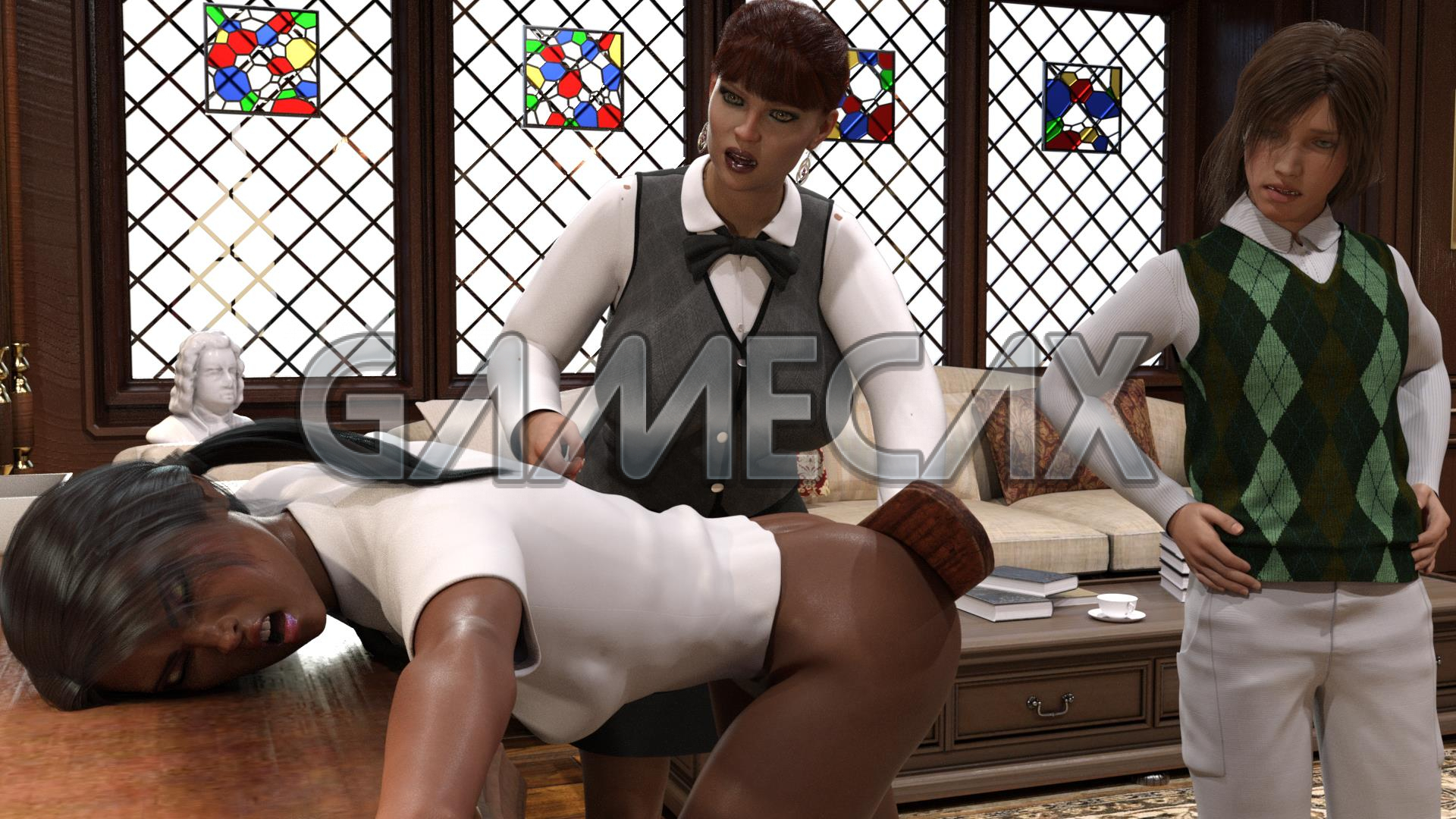
![The College [v0.81.1] [APK]](https://i0.wp.com/gamecax.com/wp-content/uploads/2020/07/the-college.jpg?fit=1920%2C1080&quality=95&strip=all&ssl=1)

Details GameThe College [v0.81.1] [APK]
 Developer: Deva Games
 Version: 0.81.1
 Operating system: Windows, Linux, Mac, Android
 Update date: 07/09/2026
 Tags: Blackmail, Blowjob, Bondage, Dating sim, Humiliation, Lesbian Adult Games, Male Protagonist Adult Games Categories: Free Sex Games APK for Android – Best Adult Mobile Games (2026), Free Sex Games for iOS & Mac – Adult Games for iPhone, iPad & macOS, Free Sex Games for Linux – Download Adult Games Ubuntu, Free Sex Games for PC – Download Adult Games for Windows
About Game The College [v0.81.1] [APK]
The College [v0.81.1] [Deva Games]
After a bad disappointment received by his father, the protagonist of “the college” is forced to attend the Baskerville college, a women’s university for extremely wealthy people. MC is forced to register due to the authority of his mother: principal of Baskerville college.
Secrets, blackmail, harassment, betrayals, but also precious friendships and sincere feelings will be at the center of “the college”.
MC will not only have to survive the hostility of the girls, but will eventually be forced to dominate them and become the new leader of the entire college.
Same Developer: Darkness Revenge
The College is a sandbox visual novel developed by Deva Games, following a male protagonist who is forced to attend Baskerville College, an exclusive women’s college controlled by his mother, who serves as its principal.
What initially appears to be an unusual college experience quickly develops into a much larger story involving rivalries, secrets, alliances, friendships, manipulation, and the protagonist’s struggle to establish his position within Baskerville.
Instead of presenting the story as a completely linear visual novel, The College combines narrative progression with a large cast of recurring characters, numerous locations, character schedules, quests, relationship development, and events that become available after particular requirements have been satisfied.
The basic progression structure can be understood as:
Explore Location → Find Character → Complete Interaction / Requirement → Advance Character Progress → Unlock Quest or Event → Open New Progression
With a large cast and many locations to manage, knowing where characters can be found and what requirements control their next events becomes an important part of the gameplay. This makes The College particularly suitable for players who enjoy sandbox visual novels where exploration and progression systems accompany the main story.
The College is built with Ren’Py and is available for desktop platforms and Android. Players looking for similar releases can browse more PC Adult Games and Android Adult Games on GameCax.
The College Review
Baskerville College Gives the Game a Strong Central Identity
The College benefits immediately from having a recognizable central setting.
Baskerville is not simply a generic background where unrelated scenes happen. The college provides the environment around which the protagonist’s relationships, conflicts, exploration, and long-term progression are organized.
As players become familiar with the campus and its surrounding locations, the setting gradually functions as a navigable network rather than just a collection of backgrounds.
The Protagonist Begins as an Outsider
The protagonist does not arrive at Baskerville because attending the college was his personal ambition.
His circumstances place him inside an environment where he initially has limited authority and must learn how the people around him operate.
This provides a natural foundation for progression:
Outsider → Learn Environment → Build Relationships → Resolve Conflicts → Increase Influence → Advance Story
His Mother Adds an Important Power Dynamic
The protagonist’s mother being the principal creates an unusual relationship between his personal situation and the institution itself.
Instead of separating family circumstances from the college storyline, the game connects them directly to the setting and the protagonist’s position within it.
The College Uses a Large Recurring Cast
One of the most distinctive aspects of The College is the number of characters involved in its sandbox.
Rather than concentrating almost entirely on two or three relationships, the game distributes progression across a much larger cast.
This gives players many possible interactions but also increases the importance of tracking each character separately.
Characters Have Their Own Progression Chains
A recurring character is rarely defined by one isolated event.
Individual storylines develop through sequences of interactions that can require previous events, particular locations, and additional progression conditions.
The useful model is:
Character → Current State → Required Interaction → Event → New Character State → Next Event
Character Locations Are a Core Gameplay Mechanic
Finding characters is important enough that character-location documentation has historically accompanied the game.
This makes location knowledge a genuine gameplay skill rather than a minor convenience.
When searching for a particular character, the useful relationship is:
Character → Schedule / Progression State → Location → Available Interaction
The Large Number of Locations Creates a Real Sandbox
The College contains many locations rather than restricting progression to a handful of rooms.
As the available world expands, players need to remember which places are associated with particular characters and objectives.
This increases exploration value while also creating more opportunities for players to miss the next required interaction.
Locations Gradually Become Progression Anchors
After players become familiar with the environment, locations acquire recognizable purposes.
Instead of thinking only about where a place exists on the map, players begin associating it with specific characters and events.
The mental model becomes:
Objective → Character → Expected Location → Interaction
Sandbox Progression Is More Important Than Random Exploration
Although players can move between locations, simply visiting every available place repeatedly is not an efficient progression strategy.
The better approach is to identify the storyline or character currently being advanced and then work backward from its requirements.
Quests Give the Sandbox Direction
Quest-style progression helps organize a game with a large cast and many possible interactions.
An objective can point the player toward a character, location, or activity required to continue the larger story.
This creates:
Quest → Requirement → Character / Location → Interaction → Result → Next Quest
Some Events Require Earlier Progress
One of the easiest ways to become stuck is to attempt an interaction before its prerequisite has been completed.
Later events can depend on earlier conversations or storyline developments, meaning that the correct location alone does not guarantee progression.
Character Progression Can Be Interconnected
With a cast this large, not every storyline needs to exist in complete isolation.
Progress made through one part of Baskerville can contribute to circumstances that affect another character or later event.
This creates potential dependencies such as:
Character A Event → Story State → Character B Requirement → New Event
Relationships Are Part of the Larger Progression Network
The College uses interpersonal relationships as more than disconnected side content.
Friendships, rivalries, alliances, and changing character dynamics contribute to the protagonist’s broader position inside Baskerville.
Not Every Character Interaction Has the Same Purpose
Some interactions primarily advance an individual storyline, while others provide information, unlock another objective, or contribute to the wider narrative.
This variety makes it important for a walkthrough to explain the result of an interaction rather than merely tell the player where to click.
Choices Can Change the Direction of Character Progression
Player decisions can affect relationships and later developments.
The consequence of a choice may therefore extend beyond the immediate conversation.
A useful dependency model is:
Choice → Character Reaction → Relationship State → Later Event → Story Consequence
Important Choices Deserve Separate Save Points
Because choices can influence later progression, maintaining multiple manual saves is useful.
A simple structure is:
Before Important Choice → Option A Save / Option B Save → Compare Later Consequences
The Large Cast Encourages Parallel Progression
Players do not necessarily need to concentrate exclusively on one character until every available event is finished.
When one storyline temporarily stops, another character or quest may provide the next productive objective.
Parallel Progression Makes the Sandbox Feel More Active
This structure gives the impression that multiple storylines are developing around the protagonist simultaneously.
It also reduces the need to repeatedly attempt one blocked interaction.
Knowing What to Do Next Is the Main Challenge
The difficulty of The College does not primarily come from mechanical execution.
The larger challenge is understanding the progression state of a large sandbox.
Players need to answer:
Who should I visit? → Where are they? → What prerequisite is missing? → Which event comes next?
Character Location Information Is Particularly Valuable
Because location lookup has been an important part of the game’s documentation, a comprehensive guide should make character locations easy to search.
The ideal lookup structure is:
Character → Current Progress Stage → Location → Available Interaction
A Character Directory Can Reduce Navigation Friction
With a large cast, players benefit from a central directory containing each important character and links to their progression information.
This is considerably easier to use than searching through one enormous chronological walkthrough.
Each Character Should Have a Progression Timeline
A useful character guide should document events in dependency order.
For example:
Introduction → Event 1 → Requirement → Event 2 → Choice → Branch → Later Event
A Quest Index Can Complement Character Guides
Players do not always remember which character section contains the solution they need.
Sometimes they remember only the objective or problem currently displayed in the game.
A quest index therefore provides a second navigation layer:
Quest → Required Character → Required Location → Previous Event → Solution
Getting Stuck Usually Means a Requirement Is Missing
When an expected event does not appear, randomly searching the entire campus is inefficient.
Use:
Current Objective → Last Completed Event → Character → Location → Previous Requirement → Next Trigger
The Last Completed Event Is the Best Starting Point
When troubleshooting, identify what happened immediately before progression stopped.
This helps determine whether the next event is actually available or whether another prerequisite must first be completed.
Missing Characters Should Be Treated as a Location Problem First
If the objective clearly requires a particular character but they cannot be found, check their expected location and current progression state before investigating more complicated explanations.
Missing Events Should Be Treated as Dependency Problems
If the character is present but the expected event does not occur, the likely issue changes.
At that point, investigate earlier events, quests, relationship progression, and any other prerequisites.
The Best Troubleshooting Guide Works Backward
A conventional walkthrough tells the player everything that happens from beginning to end.
A better guide also supports reverse lookup:
Missing Event → Character → Required Previous Event → Required Quest → Location → Trigger
The College Has Strong Walkthrough Potential
The combination of a large cast, many locations, character progression, quests, and event dependencies creates exactly the type of game where structured documentation provides significant value.
This is reinforced by the developer’s long history of providing walkthrough and character-location documentation alongside the game.
A Single Linear Walkthrough Is Not Enough
For a game with many characters and locations, a chronological walkthrough can become difficult to search.
A stronger guide should combine several navigation methods:
- Character index
- Character locations
- Quest index
- Main story progression
- Character progression chains
- Important choices
- Missing-event troubleshooting
Character Search Should Be the Primary Navigation Method
When a player knows which character they are trying to progress, they should be able to jump directly to that character rather than scrolling through unrelated story events.
Quest Search Should Be the Secondary Navigation Method
If the player knows the objective but not the relevant character, the quest index should provide the reverse connection.
This creates a two-way guide architecture:
Character → Quest → Requirement
and:
Quest → Character → Requirement
The Ren’Py Transition Benefits Save-Based Exploration
The College uses Ren’Py, making manual save management particularly useful when exploring alternative choices and character progression.
Players interested in comparing different outcomes should maintain checkpoints before important decisions rather than relying on one continuous save.
The Visual Presentation Supports a Large Cast
The game’s rendered presentation gives individual characters recognizable visual identities, which becomes increasingly important as the number of recurring characters grows.
Distinct characters and environments help make a large sandbox easier to mentally organize.
The Main Strength Is the Scale of Its Progression Network
The College is at its best when Baskerville feels like a connected environment containing many active characters rather than a simple sequence of isolated scenes.
The number of relationships and locations gives players a substantial amount of progression to discover.
The Same Scale Is Also Its Main Weakness
A large sandbox naturally becomes harder to navigate.
When several unfinished storylines exist simultaneously, remembering every prerequisite and character location becomes increasingly difficult without documentation.
Players Who Enjoy Completion Have Plenty to Track
For completion-focused players, the large cast turns character progression into a long-term objective.
Rather than simply reaching the next chapter, players can attempt to discover all available character events and alternative progression paths.
A Dependency Database Would Be Better Than a Traditional Walkthrough
The ideal long-term guide for The College should treat each event as structured information.
Use:
Character → Event → Previous Event → Quest → Location → Choice → Result → Next Event
Reverse Lookup Creates the Highest Information Value
Once that information is structured correctly, players can begin with the problem rather than the beginning of the game:
Desired Event → Character → Missing Prerequisite → Required Quest → Required Location → Trigger
Pros
- Large recurring cast provides extensive character progression.
- Baskerville College gives the game a recognizable central setting.
- Many locations create a substantial sandbox environment.
- Character-specific progression encourages exploration.
- Quest-style objectives provide structure to the sandbox.
- Character locations add another meaningful navigation layer.
- Multiple storylines can progress in parallel.
- Choices and relationships contribute to later developments.
- Large amount of content for completion-focused players.
- Ren’Py supports convenient manual save management.
- Strong potential for character, quest, and location-based walkthrough content.
- Available on both desktop and Android.
Cons
- The large cast can make progression difficult to track.
- Finding the correct character can become a recurring navigation challenge.
- Some later events may be difficult to diagnose when an earlier prerequisite is missing.
- Managing several unfinished character storylines can become overwhelming.
- A traditional chronological walkthrough is difficult to navigate at this scale.
- Players who prefer tightly linear visual novels may find the sandbox structure less direct.
Final Verdict
The College stands out primarily through the scale of its character and location network. Baskerville provides a central environment where numerous recurring characters, quests, relationships, and story events can develop simultaneously.
The protagonist’s unusual position inside the college gives the story a clear foundation, while the sandbox structure allows progression to expand far beyond the initial premise.
Its greatest strength and biggest challenge are essentially the same thing: scale. Having many characters and locations gives players plenty to discover, but it also makes remembering character locations, prerequisites, and unfinished progression increasingly difficult.
That makes The College particularly suitable for a structured walkthrough. Instead of simply reproducing the story chronologically, a useful guide can connect characters, quests, locations, previous events, choices, and later consequences into a searchable progression network.
For players who enjoy large sandbox visual novels where completing character storylines is as important as following the central narrative, The College offers a substantial amount of long-term progression.
| Category | Score |
|---|---|
| Story & Setting | 8.7 / 10 |
| Character Variety | 9.3 / 10 |
| Character Progression | 9.0 / 10 |
| Sandbox Structure | 9.0 / 10 |
| Locations & Exploration | 8.9 / 10 |
| Quest Progression | 8.8 / 10 |
| Progression Clarity | 8.3 / 10 |
| Visual Presentation | 8.7 / 10 |
| Replay / Completion Value | 9.1 / 10 |
| Overall | 8.9 / 10 |
Explore More About The College
How Progression Works in The College
The College is built around a large sandbox progression system where characters, locations, quests, and previous events are closely connected. Instead of simply reading through a linear story, players gradually unlock new interactions by exploring Baskerville College and advancing multiple character routes.
The core progression model is:
Character → Previous Event → Location → Quest Requirement → New Interaction → Story Progress
Baskerville College Is the Center of Every Storyline
Nearly every major storyline begins or returns to Baskerville College. Classrooms, dormitories, libraries, gyms, gardens, and surrounding areas gradually become associated with different characters, making location knowledge one of the most important progression skills.
Character Locations Matter More Than Random Exploration
The game features dozens of recurring characters spread across many locations, and Deva Games has consistently released separate character-location documentation alongside the game. This makes finding characters a genuine gameplay mechanic rather than a convenience.
The useful lookup structure is:
Character → Current Story State → Expected Location → Available Event
Quests Connect Every Progression System
Quests provide direction inside the sandbox by identifying which character, location, or interaction should be prioritized next. Rather than treating every conversation equally, objectives help players identify meaningful progression.
The quest loop becomes:
Quest → Requirement → Character → Location → Event → Next Quest
Previous Events Often Become Hidden Requirements
One of the most common reasons players become stuck is attempting to trigger a scene before completing its prerequisite. A character may appear in the correct location while the actual missing requirement is an earlier conversation or completed quest.
Character Routes Can Progress in Parallel
Because The College includes a large recurring cast, several storylines can be advanced simultaneously. When one character temporarily reaches a progression wall, another route often provides the next productive objective.
Choices Influence Later Character Development
Important decisions affect relationships and later story events. Rather than changing only the immediate dialogue, some choices establish long-term character states that influence future progression.
The relationship model is:
Choice → Character State → Relationship → Later Event → Story Consequence
Manual Saves Make Alternative Routes Easier
Since choices influence progression, keeping separate save files before major decisions allows players to explore different outcomes without replaying large sections of the game.
Character Directories Are Better Than Linear Walkthroughs
With such a large cast, searching one chronological walkthrough becomes inefficient. A character-first guide allows players to jump directly to the storyline they want to continue.
The ideal structure is:
Character → Current Event → Requirement → Next Event
Quest Indexes Solve Different Problems
Sometimes players remember the objective instead of the character involved. A quest index complements character guides by allowing progression to be searched from the objective itself.
Use:
Quest → Required Character → Required Location → Previous Event → Solution
Character Relationships Shape the World of Baskerville
Friendships, rivalries, alliances, and conflicts all contribute to the protagonist’s growing influence inside Baskerville College. Rather than existing as isolated romance routes, relationships become part of the broader political and social structure of the school.
Finding Missing Events Efficiently
If an expected scene does not appear, avoid searching every location randomly. Instead, use a dependency-first approach.
Current Objective → Previous Event → Character → Location → Requirement → Trigger
Why Character Locations Are So Valuable
Developer documentation has historically included dedicated character-location references alongside walkthroughs, highlighting how important navigation is within the game’s design.
The Best Walkthrough Uses Reverse Lookup
Rather than beginning from Chapter 1, the strongest guide starts from the player’s problem.
Missing Event → Character → Previous Requirement → Location → Trigger
How to Organize a Complete GameCax Guide
For long-term SEO, The College is better served by a searchable database than a traditional walkthrough.
The recommended structure is:
- Character Directory
- Character Locations
- Main Story Progression
- Quest Index
- Important Choices
- Character Routes
- Missing Event Troubleshooting
What Makes The College Different
The College succeeds because Baskerville feels like a living environment rather than a sequence of isolated scenes. Its combination of a large cast, meaningful exploration, character progression, and interconnected quests gives it substantially more long-term progression than a conventional visual novel.
Image Game The College [v0.81.1] [APK]





Other Information Game The College [v0.81.1] [APK]
FAQ:
Installation:
ChangeLog:
Note:
Video Game The College [v0.81.1] [APK]
There are currently no YouTube videos for this game.
Link Download Game The College [v0.81.1] [APK]
 OS: Windows
 OS: IOS
 OS: Android
 OS: Linux
Comment game The College [v0.81.1] [APK]


![Inside The Griffins [v0.1] [APK]](https://i0.wp.com/gamecax.com/wp-content/uploads/2026/10/inside-the-griffins.jpg?resize=128%2C72&quality=95&strip=all&ssl=1)
![The Home of Pleasure [Ep.3 P3 v0.3.3] [APK]](https://i0.wp.com/gamecax.com/wp-content/uploads/2026/10/the-home-of-pleasure.jpg?resize=128%2C24&quality=95&strip=all&ssl=1)
![Jack Hunter [v0.4] [APK]](https://i0.wp.com/gamecax.com/wp-content/uploads/2026/09/jack-hunter-3.jpg?resize=128%2C72&quality=95&strip=all&ssl=1)
![Eclipsis [Ep.3] [APK]](https://i0.wp.com/gamecax.com/wp-content/uploads/2026/10/eclipsis.jpg?resize=128%2C72&quality=95&strip=all&ssl=1)
![Two Heroes and a Burden [v0.2] [APK]](https://i0.wp.com/gamecax.com/wp-content/uploads/2026/06/two-heroes-and-a-burden.jpeg?resize=128%2C72&quality=95&strip=all&ssl=1)
![Firebreak [v0.1b] [APK]](https://i0.wp.com/gamecax.com/wp-content/uploads/2026/10/firebreak-4.jpg?resize=128%2C32&quality=95&strip=all&ssl=1)
![Waifu Academy [v0.13.5] [APK]](https://i0.wp.com/gamecax.com/wp-content/uploads/2024/01/waifu-academy-1-1.jpg?fit=1600%2C400&quality=95&strip=all&ssl=1)