 0
0


Download game Wild Life [v2026-06-15 Full]
IMAGE GAME Wild Life [v2026-06-15 Full]
![Wild Life [v2026-06-15 Full]](https://i0.wp.com/gamecax.com/wp-content/uploads/2023/01/wild-life.jpg?fit=400%2C200&quality=95&strip=all&ssl=1)

Details GameWild Life [v2026-06-15 Full]
 Developer: Adeptus Steve
 Version: 2026-06-15 Full
 Operating system: Windows 64Bit, Linux
 Tags: 3D game, Anal Sex, Animated, Best 3DCG Games, Bestiality Games Collection, combat, Female Protagonist Games, Furry Games, Gay Games, Group, Lesbian Adult Games, Male Protagonist Adult Games, Monster, Oral Sex Adult Games, Sandbox, Sci-fi, Tentacles, Titfuck, Vaginal Sex Adult Games, Virtual reality - Adult VR Games Categories: Best 3D Sex Games – Free Download, Free Sex Games for Linux – Download Adult Games Ubuntu, Free Sex Games for PC – Download Adult Games for Windows
About Game Wild Life [v2026-06-15 Full]
Wild Life [v2026-06-15 Full] [Adeptus Steve]
3D game with a lot of furry, monsters, futa, lesbian and gay sex.
Wild Life is an ambitious open-world adult RPG developed by Adeptus Steve. Unlike conventional visual novels built primarily around dialogue screens and predetermined scenes, Wild Life combines a fully explorable 3D world with quests, combat, character progression, NPC routines, customization, interactive environments, and a powerful sandbox system.
The project is built with Unreal Engine 5, giving the development team access to technologies designed for large and detailed environments. Systems such as World Partition, Nanite, and procedural generation tools help support the scale of the world while allowing the developers to construct environments that would have been considerably more difficult to realize using the project’s earlier technology.
Exploration is therefore an important part of the experience. Wild Life is designed around traveling through a large fantasy world rather than selecting locations from a traditional visual novel menu. Settlements, wilderness areas, points of interest, quests, NPCs, and environmental features are distributed throughout the map, giving players reasons to explore beyond simply moving toward the next story scene.
The game also incorporates RPG progression. Looting, leveling, character attributes, equipment, quests, and other interconnected systems contribute to a broader gameplay loop. The goal is to make exploration, combat, progression, and story content function together rather than existing as completely separate features.
Combat includes both melee and ranged options, allowing encounters to function as an actual part of the RPG rather than as occasional scripted sequences. Character attributes and progression further influence the player’s capabilities as they continue exploring the world.
NPCs are another important component of the open-world design. Rather than existing only as static interaction points, characters can follow routines and navigate through the environment. This helps settlements and other populated areas feel more dynamic while creating a stronger sense that the world continues functioning around the player.
Wild Life is also particularly well known for its extensive Sandbox Mode. The Sandbox provides tools for creating and arranging custom scenes, placing characters and objects, adjusting poses and animations, changing environments, and experimenting with content outside the main story progression. Over time, these tools have developed into a substantial creative system rather than a simple scene viewer.
Character customization and detailed 3D presentation are equally important to the project’s identity. Characters use complex models, animations, clothing, physics, and customization systems that take advantage of modern PC hardware but also make Wild Life considerably more demanding than lightweight visual novels.
Because Wild Life runs on Unreal Engine 5 and contains a large amount of high-resolution 3D content, players should expect significantly larger downloads and higher hardware requirements than games developed with engines such as Ren’Py or RPG Maker. Installing the game on an SSD, keeping graphics drivers updated, and having sufficient storage space can noticeably improve the overall experience.
Wild Life is primarily designed as a PC experience. You can browse more Windows Adult Games available on GameCax.
Wild Life Review
Far More Than a Traditional Visual Novel
The most important thing to understand about Wild Life is that comparing it directly with a conventional visual novel does not make much sense. The project is attempting something substantially more technically demanding.
Instead of presenting characters primarily through rendered images and dialogue, Wild Life places them inside interactive real-time 3D environments. The player can move through the world, explore locations, interact with NPCs, complete quests, fight enemies, develop characters, and experiment with the sandbox systems.
This fundamentally changes what players should expect from both the gameplay and the hardware required to run it.
Unreal Engine 5 Is Central to the Current Version of Wild Life
Wild Life originally spent years being developed using Unreal Engine 4 before Adeptus Steve migrated the project to Unreal Engine 5. That transition was difficult and temporarily introduced problems involving performance, physics, lighting, fur, and other systems, but it ultimately gave the development team access to technology better suited to the scale of the project.
The current development pipeline makes extensive use of Unreal Engine 5 tools for building and managing the world. This is particularly important because the environment has become considerably larger and more complex than the smaller areas associated with earlier versions of Wild Life.
World Partition Helps Make the Open World Possible
World Partition is particularly relevant to Wild Life because large open-world environments need to be divided and streamed efficiently rather than keeping the entire map active simultaneously.
For the development team, these tools make constructing and maintaining a large interconnected world considerably more practical. For players, the result is a game designed around continuous exploration rather than a collection of disconnected visual novel backgrounds.
Nanite Supports More Detailed Environments
Nanite is another UE5 technology specifically highlighted by the developers when discussing the transition from Unreal Engine 4. It allows the environment team to work with highly detailed geometry more efficiently, helping Wild Life pursue a level of environmental complexity that would have been much more difficult under the project’s previous pipeline.
This does not mean performance becomes irrelevant. Detailed geometry, complex characters, lighting, physics, and large environments can still place considerable demands on PC hardware.
PCG Helps Build a Larger World
Procedural Content Generation tools also contribute to the development workflow. A project attempting to create a large world cannot rely entirely on manually placing every environmental detail one object at a time.
Using procedural tools allows the team to populate and iterate on environments more efficiently while still manually refining important gameplay areas and points of interest.
The World Is Designed for Exploration
Wild Life’s environments are intended to be explored rather than merely viewed. Settlements, wilderness areas, landmarks, resources, NPCs, quests, and points of interest create reasons to travel across the map.
The development team has continued improving traversal and wayfinding while adding additional points of interest, demonstrating that navigation through the world is considered part of the actual gameplay rather than simply a way to connect story scenes.
Quests Provide Structure to the Open World
A large environment becomes meaningless if there is nothing worthwhile to discover inside it. Wild Life therefore uses both story and quest content to guide exploration.
Main quests provide broader narrative direction while additional quests can introduce characters, locations, conflicts, and activities throughout the world. This structure allows players to experience the setting through gameplay instead of receiving all of its information through exposition.
Combat Has Become a Core Gameplay System
Combat is no longer simply an experimental feature. Adeptus Steve has described dialogue, combat, NPC routines, and navigation as stable core systems, while more recent development has focused on integrating melee and ranged combat into a unified gameplay flow.
This gives Wild Life substantially more mechanical depth than a typical adult visual novel.
Melee and Ranged Combat Offer Different Approaches
Supporting both melee and ranged weapons gives encounters more flexibility. Players are not restricted to a single interaction style, and character progression can eventually complement different approaches to combat.
Recent development has also continued improving combat effects, feedback, animations, sound events, and the interaction between weapons and other character animations.
Leveling and Character Progression Matter
Wild Life incorporates leveling and progression systems designed to connect combat and exploration with longer-term character development.
Attributes and bonuses provide another layer beyond simply obtaining different equipment. Systems involving shrines and attribute bonuses, for example, have continued to receive refinement as the developers move toward the full gameplay loop.
Looting Connects Exploration and Combat
Looting is another important component because it provides tangible rewards for interacting with the world. Finding items through exploration or encounters helps connect the RPG systems instead of making each activity feel isolated.
The developer’s recent focus has specifically been on making looting, leveling, combat, world population, and quests function together as a coherent gameplay loop.
NPC Routines Make the World More Dynamic
NPC routines are particularly important for immersion. Characters that move, follow schedules, and navigate environments can make settlements feel substantially more convincing than areas populated entirely by static NPCs waiting for the player.
This also increases technical complexity because AI navigation must function correctly across a large and changing environment.
The Sandbox Is Almost a Game Inside the Game
Wild Life’s Sandbox is one of the project’s most distinctive features. What began as a way to experiment with characters and scenes has developed into an increasingly sophisticated creation environment.
Players can work with characters, animations, props, poses, environments, and numerous customization tools without needing to follow the main story.
For some players, experimenting with the Sandbox can provide as much replay value as the RPG itself.
Voxel World Tools Expand Sandbox Creation
Recent Sandbox development has gone even further through Voxel World functionality. Terrain editing tools allow creators to manipulate environments rather than limiting custom scenes to arranging objects inside fixed maps.
Features such as terrain brushes, mesh stamps, brush masks, material painting, and other editing controls move the Sandbox closer to a lightweight world-building toolkit.
Custom Sandbox Scenes Can Be Shared
The ability to export custom scenes gives the Sandbox a community dimension. Players can build environments and arrangements that go beyond what the developers originally included and share their creations with others.
This also explains why bugs involving scene export receive significant attention: losing or incorrectly exporting complex Voxel World data can directly affect player-created content.
Character Customization Is Extensive
Wild Life places substantial emphasis on character presentation and customization. Models, clothing, hairstyles, proportions, materials, poses, animations, and other visual elements can be adjusted through the project’s character systems.
This flexibility is particularly valuable inside Sandbox Mode because characters do not need to remain limited to their default story presentation.
Real-Time 3D Animation Changes the Presentation
Unlike pre-rendered visual novels, Wild Life renders characters and interactions in real time. Camera movement, character positioning, lighting, physics, animation blending, and environment rendering all occur dynamically.
The advantage is greater freedom and interactivity. The disadvantage is that significantly more processing power is required from the player’s hardware.
Physics Are More Complex Than They Look
Character physics have historically been one of the more technically challenging parts of Wild Life. The transition to Unreal Engine 5 also involved moving to newer physics technology, which required considerable adjustment.
Hair, clothing, character interactions, ropes, environmental objects, and other dynamic elements all introduce potential edge cases that simply do not exist in a static 2D visual novel.
Performance Matters Much More Than With Ren’Py Games
Players moving from conventional adult visual novels should pay particular attention to performance. Wild Life is a modern real-time 3D game running on Unreal Engine 5, not a lightweight application primarily displaying pre-rendered images.
GPU capability, VRAM, CPU performance, system memory, storage speed, graphics drivers, resolution, and graphics settings can all influence performance.
An SSD Is Strongly Recommended
Installing Wild Life on an SSD is a sensible choice given the amount of data involved in its environments, characters, textures, animations, and other assets.
Fast storage can help reduce asset-loading bottlenecks compared with older mechanical hard drives, particularly as the game’s world and asset library continue growing.
Keep Your Graphics Drivers Updated
Adeptus Steve has previously recommended updating both the operating system and graphics drivers when major Unreal Engine changes were introduced.
This remains good practice for a UE5 project. Recent stable GPU drivers can resolve compatibility problems and provide optimizations that are irrelevant to lightweight visual novels but much more important for modern real-time rendering.
DirectX 12 Can Introduce Shader-Related Issues
Earlier UE5 builds experienced noticeable shader-compilation stutter when materials were encountered for the first time. Although development and engine improvements can reduce these problems, shader compilation remains an important consideration in modern Unreal Engine games.
Short stutters do not necessarily indicate insufficient RAM or a corrupted installation, particularly when they occur while encountering new visual assets for the first time.
The Download Is Much Larger Than a Typical Visual Novel
Players should prepare sufficient free storage before downloading Wild Life. Recent public builds have reached roughly the 23 GB range, which is dramatically larger than many Ren’Py projects.
Updates can also require additional temporary space during extraction or installation, so keeping only the exact download size available may not always be sufficient.
Controller Support Is Becoming More Complete
The development team has continued improving controller compatibility across gameplay and menus. Most of the game and its interfaces have been targeted for controller play, although advanced Sandbox editing remains naturally better suited to mouse and keyboard.
This is particularly useful for players who prefer exploring and fighting from a controller while reserving keyboard and mouse controls for creative tools.
The Current Patreon Sandbox and Future 1.0 Should Be Distinguished
One important point for new players is that Wild Life is transitioning toward a different release structure. The builds distributed during development combine systems and Sandbox functionality that should not automatically be treated as identical to the structure planned for the commercial 1.0 release.
Adeptus Steve plans to launch Wild Life 1.0 as a full release rather than Early Access, while Sandbox is planned to follow separately as free DLC.
Years of Development Have Created Both Strengths and Challenges
Wild Life has been developed for many years, during which its scope expanded dramatically. The project moved from Unreal Engine 4 to Unreal Engine 5, replaced or rebuilt systems, redesigned world content, expanded its team, and transformed its original concept into a substantially larger RPG.
This history explains why old screenshots, guides, maps, or technical information found online can sometimes be misleading. Information written for an old UE4 build may no longer accurately describe the current game.
Pros
- Built around a genuine open-world RPG structure rather than a conventional visual novel.
- Modern Unreal Engine 5 technology.
- Large explorable 3D environments.
- World Partition supports large-scale world development.
- Nanite helps enable detailed environmental geometry.
- PCG assists with building and populating larger environments.
- Main and side quest systems.
- Melee and ranged combat.
- Leveling, attributes, loot, and character progression.
- NPC routines and navigation systems.
- Extensive character customization.
- Real-time 3D animation and physics.
- Highly flexible Sandbox Mode.
- Voxel terrain and environment-editing tools.
- Custom Sandbox scene creation and sharing.
- Continuing controller-support improvements.
Cons
- Much higher hardware requirements than Ren’Py or RPG Maker games.
- Large download and installation size.
- Performance depends heavily on GPU, VRAM, CPU, storage, and graphics settings.
- Modern Unreal Engine rendering can introduce shader-related stuttering or other technical issues.
- The project’s long development history means older guides and technical information can become outdated.
- Sandbox creation tools can be considerably more complicated than ordinary visual novel gameplay.
- Major engine and system changes have historically introduced temporary bugs and performance problems.
Final Verdict
Wild Life occupies a very different position from most adult games because Adeptus Steve is attempting to build a genuine real-time 3D RPG rather than placing adult content on top of a conventional visual novel framework. Exploration, quests, melee and ranged combat, leveling, loot, NPC routines, character customization, and a large open world all contribute to a significantly broader gameplay experience.
The move to Unreal Engine 5 has become central to that ambition. World Partition, Nanite, procedural generation tools, modern rendering, physics, and the team’s revised development pipeline make it possible to construct environments and gameplay systems on a scale that would have been considerably more difficult during the project’s earlier years.
Sandbox Mode makes the project even more unusual. Character placement, animations, props, environment customization, Voxel World editing, and scene sharing turn it into a creative platform alongside the main RPG experience.
All of that complexity comes at a cost. Wild Life requires substantially more storage and stronger PC hardware than a typical Ren’Py visual novel, while real-time rendering introduces performance and compatibility considerations that simply do not exist in pre-rendered games. Players should therefore pay attention to GPU capability, VRAM, available storage, graphics drivers, and performance settings before treating it like another lightweight adult game download.
For players with appropriate hardware who want exploration and genuine gameplay alongside high-quality real-time 3D presentation, however, Wild Life remains one of the most technically ambitious projects in its category.
| Category | Score |
|---|---|
| World & Exploration | 9.4 / 10 |
| Graphics & Presentation | 9.6 / 10 |
| Gameplay Systems | 9.1 / 10 |
| Combat | 8.7 / 10 |
| Character Customization | 9.5 / 10 |
| Sandbox Mode | 9.7 / 10 |
| Technical Performance | 8.2 / 10 |
| Content & Ambition | 9.6 / 10 |
| Overall | 9.3 / 10 |
Explore More on GameCax
Discover More Open-World PC Games
If you enjoy the freedom and real-time 3D gameplay of Wild Life, GameCax features other PC games that go beyond the traditional visual-novel format. Wild Life combines open-world exploration, quests, combat, leveling, loot, character customization, NPC routines, and sandbox creation into a much larger gameplay experience than most story-focused adult games.
Explore the Wild Life Sandbox
Sandbox Mode is one of Wild Life’s most distinctive features. Instead of being limited to the main RPG progression, players can experiment with characters, animations, props, poses, environments, custom scenes, and increasingly advanced world-building tools. Voxel World functionality expands this further by allowing terrain and environments to be edited rather than simply arranging characters inside predefined maps.
Built for Modern PC Hardware
Wild Life uses Unreal Engine 5 and is considerably more demanding than lightweight visual novels. Players interested in similar desktop experiences can browse more Windows Adult Games available on GameCax.
Image Game Wild Life [v2026-06-15 Full]


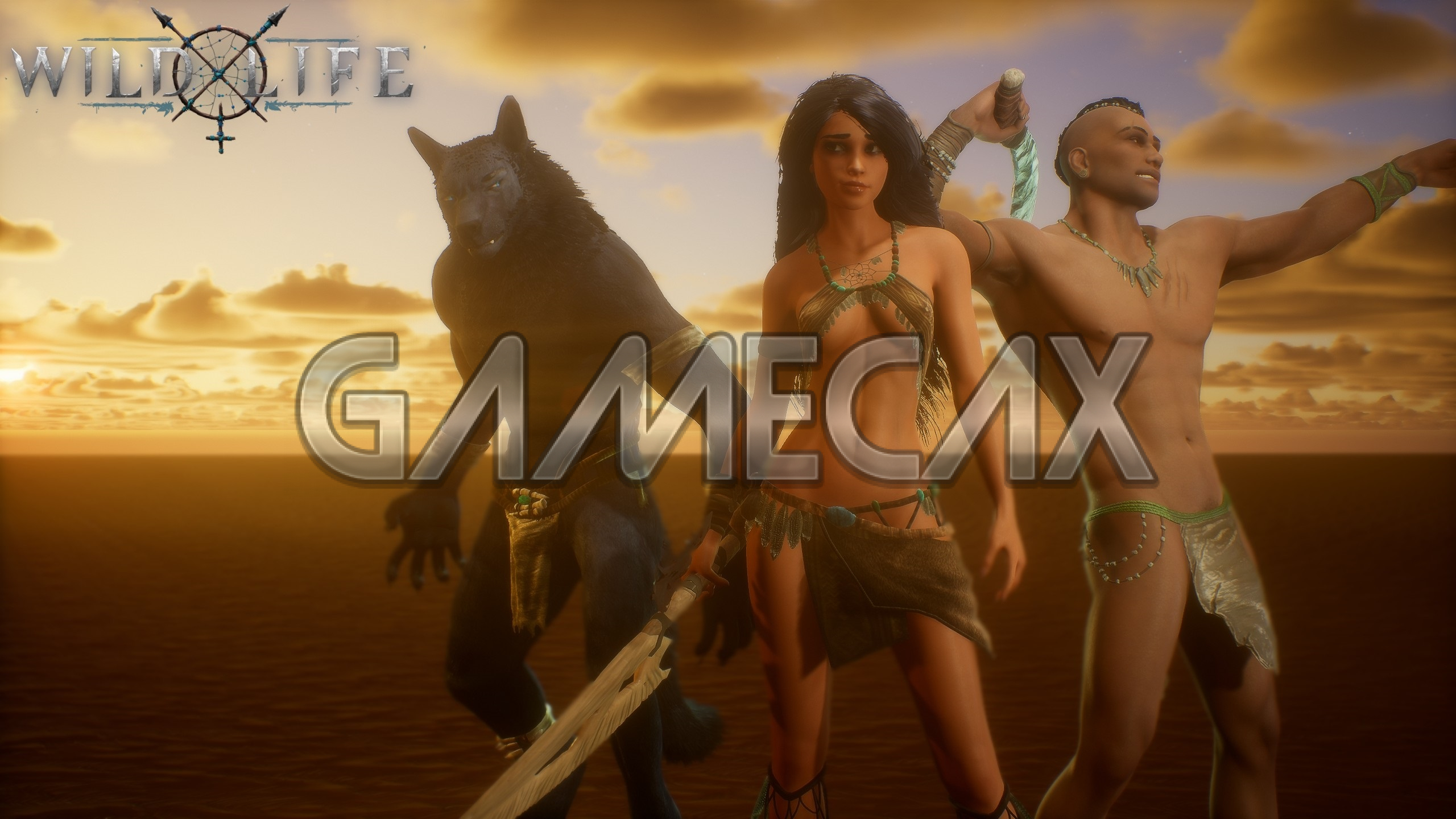

Other Information Game Wild Life [v2026-06-15 Full]
FAQ:
Installation:
ChangeLog:
Note:
Video Game Wild Life [v2026-06-15 Full]
There are currently no YouTube videos for this game.
Link Download Game Wild Life [v2026-06-15 Full]
 OS: Windows
 OS: Linux
OS: Windows
OS: Windows
OS: Windows
OS: Linux
OS: Windows
OS: Windows
OS: Windows
Comment game Wild Life [v2026-06-15 Full]


![Inside The Griffins [v0.1] [APK]](https://i0.wp.com/gamecax.com/wp-content/uploads/2026/10/inside-the-griffins.jpg?resize=128%2C72&quality=95&strip=all&ssl=1)
![The Home of Pleasure [Ep.3 P3 v0.3.3] [APK]](https://i0.wp.com/gamecax.com/wp-content/uploads/2026/10/the-home-of-pleasure.jpg?resize=128%2C24&quality=95&strip=all&ssl=1)
![Jack Hunter [v0.4] [APK]](https://i0.wp.com/gamecax.com/wp-content/uploads/2026/09/jack-hunter-3.jpg?resize=128%2C72&quality=95&strip=all&ssl=1)
![Eclipsis [Ep.3] [APK]](https://i0.wp.com/gamecax.com/wp-content/uploads/2026/10/eclipsis.jpg?resize=128%2C72&quality=95&strip=all&ssl=1)
![Two Heroes and a Burden [v0.2] [APK]](https://i0.wp.com/gamecax.com/wp-content/uploads/2026/06/two-heroes-and-a-burden.jpeg?resize=128%2C72&quality=95&strip=all&ssl=1)
![Firebreak [v0.1b] [APK]](https://i0.wp.com/gamecax.com/wp-content/uploads/2026/10/firebreak-4.jpg?resize=128%2C32&quality=95&strip=all&ssl=1)
![Waifu Academy [v0.13.5] [APK]](https://i0.wp.com/gamecax.com/wp-content/uploads/2024/01/waifu-academy-1-1.jpg?fit=1600%2C400&quality=95&strip=all&ssl=1)