 0
0


Download game Book of Lust [v0.1.42.1a] [APK]
IMAGE GAME Book of Lust [v0.1.42.1a] [APK]
![Book of Lust [v0.1.42.1a] [APK]](https://i0.wp.com/gamecax.com/wp-content/uploads/2019/11/book-of-lust.jpg?fit=1600%2C400&quality=95&strip=all&ssl=1)

Details GameBook of Lust [v0.1.42.1a] [APK]
 Developer: KanashiiPanda
 Version: 0.1.42.1a
 Operating system: Windows, Mac, Linux, Android
 Update date: 12/07/2026
 Tags: 2DCG Adult Games, Animated, Furry Games, Incest, Male Protagonist Adult Games, Mind control, Oral Sex Adult Games, Paranormal, Possession, Transformation, Vaginal Sex Adult Games Categories: Free Sex Games APK for Android – Best Adult Mobile Games (2026), Free Sex Games for iOS & Mac – Adult Games for iPhone, iPad & macOS, Free Sex Games for Linux – Download Adult Games Ubuntu, Free Sex Games for PC – Download Adult Games for Windows
About Game Book of Lust [v0.1.42.1a] [APK]
Book of Lust [v0.1.42.1a] [KanashiiPanda]
You will be transformed into a guy. One day, he’s given a mysterious spellbook and accidentallyreleases a succubus. Embark on a journey of complete and utter degeneracy as you mind control, swap bodies, birth demons, and order your personal succubus to possess those around you.
Fetishes so far:
-Furry
-Possession
-Mind Control
-Incest
-Body swap
-Infidelity
-Hentai Dialogue
-Impregnation
Guide: https://gamecax.com/guide/book-of-lust-guide/
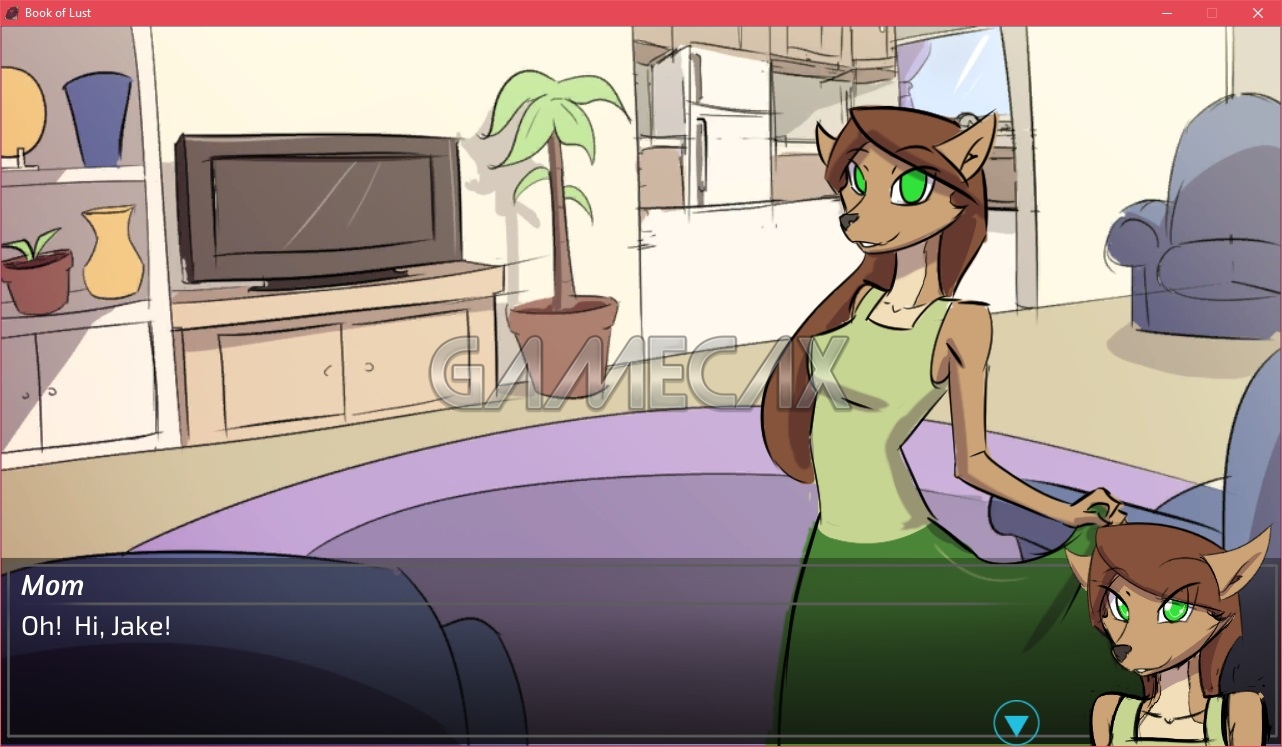
Book of Lust is a supernatural sandbox RPG developed by KanashiiPanda. The story begins when Jake accidentally releases a succubus and gains access to a spellbook filled with increasingly unusual supernatural abilities. What initially appears to be a simple supernatural encounter gradually expands into a complex system of spells, character statistics, body swapping, possession-like mechanics, dream exploration, time-based events, quests, and multiple playable perspectives.
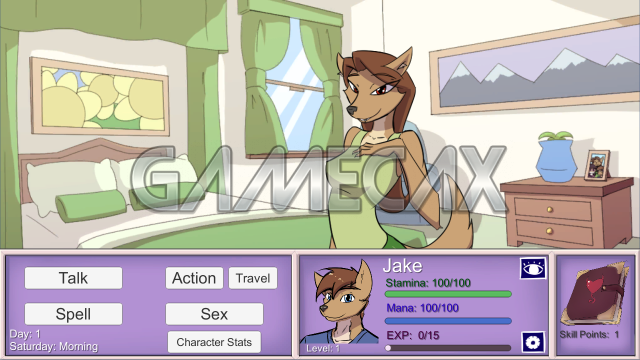
The game is structured less like a conventional linear visual novel and more like a character-driven sandbox. Players move between locations, advance through different periods of the day, talk to characters, manage mana and stamina, raise relationship-related statistics, unlock talents, and use supernatural abilities to alter how certain events can unfold.
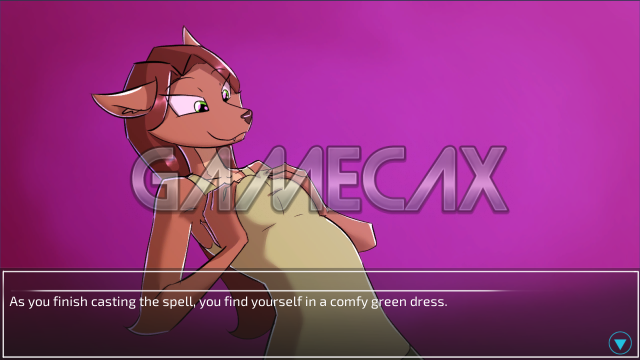
One of Book of Lust’s defining features is its spell system. Abilities such as Dreamwalk, Soul Passenger, Body Swap, Soul Link, Affection, Bend Will, Dominate Mind, Delve, and other supernatural skills introduce different forms of progression rather than functioning as simple one-time story choices.
Many of these abilities have their own requirements. Some consume mana, others depend on character statistics or earlier progression, and several unlock alternate interactions only after the target character has reached the correct state. Because of this, a scene or conversation may remain unavailable even when the player has already met the character.
The game also uses several character statistics, including Love, Lust, Influence, Obedience, mana, stamina, and experience. These values interact with talents and supernatural abilities, creating a progression system where the player must often decide whether to invest resources into immediate character development or save them for more advanced spells.
Another major mechanic is the ability to experience parts of the game from different characters’ perspectives. Body Swap and Soul Passenger can change who the player is controlling, opening different conversations, locations, events, and interactions that would not be available while playing only as Jake.
Time also matters. The world uses different periods such as morning, evening, night, and late night, while certain characters follow schedules or appear only during specific windows. Some events additionally depend on a particular day of the week or on whether another event has already occurred.
The current game includes a growing collection of recurring characters such as Julia, Cassandra, Olivia, Mia, Caroline, Valerie, Mel, Katherine, Kayla, BlightFire, and others. Rather than treating them as completely isolated routes, Book of Lust frequently connects their progression through spells, quests, schedules, and shared story events.
Book of Lust currently has official desktop releases for Windows, macOS, and Linux. Players looking for other desktop titles can browse more PC Adult Games available on GameCax.
The F95Zone thread currently lists v0.1.42.1a, but newer official releases have already appeared. Version 0.1.43.1b became a public build in August 2026, while v0.1.44.1a is listed by the developer as a newer supporter release. For an evergreen GameCax page, the version number should therefore remain outside the SEO title, H1, and canonical URL.
Book of Lust Review
The Spellbook Is the Core Progression System
The most distinctive part of Book of Lust is its supernatural ability system.
Instead of treating powers as occasional plot devices, the game makes them part of the player’s regular progression. New spells can change how characters respond, alter who the player controls, provide access to new information, or open entirely different event sequences.
This gives the game a stronger systems-driven identity than a traditional visual novel.
Mana Creates a Resource Layer
Many supernatural abilities consume mana, which means the player cannot simply cast every available spell without considering cost.
Mana regeneration is linked to resting and other progression systems, while talents can improve how efficiently the player operates.
This creates a basic loop:
Rest → Recover Mana → Cast Spell → Alter Character or Event State → Unlock New Progression
Stamina Prevents Unlimited Actions
Stamina serves a similar role for physical actions and certain interactions.
Older updates repeatedly adjusted stamina requirements and regeneration, showing that it is intended to function as a meaningful progression resource rather than a decorative statistic.
Managing both stamina and mana becomes increasingly important as more abilities and character routes become available.
The Talent Tree Gives the Game RPG Progression
Book of Lust includes a talent tree rather than relying only on fixed story unlocks.
Experience earned through actions can be invested into talents that improve supernatural abilities or character-stat progression. Skills such as Fortitude, Rejuvenation, Unholy Charisma, Unholy Seducer, Affection, Obedience, and other upgrades change how efficiently the player can influence later systems.
This makes character building a meaningful part of the overall sandbox.
Respec Allows Different Builds
The game also includes a respec system, allowing players to change their talent investments rather than permanently committing to one build.
Older updates have repeatedly adjusted the cost and behavior of respec, indicating that the developer expects players to experiment with different ability combinations.
This is especially useful when a later quest depends on a spell that the player did not initially prioritize.
Dreamwalk Is One of the Most Important Abilities
Dreamwalk allows the player to enter a target character’s dream and experience memories or dream-specific sequences.
The mechanic began with limited character support but has gradually expanded. Recent updates added Dreamwalk progression for BlightFire, including multiple memory sequences and repeatable access once the required progression has been reached.
This creates another dependency chain:
Character Progress → Requirement → Dreamwalk → Memory → Additional Character Information
Dreamwalk Can Have Character-Specific Requirements
Dreamwalk is not automatically available for every character at the same stage.
For example, recent BlightFire progression requires reaching a later point in her storyline before Dreamwalk becomes available. This means a walkthrough needs to document the prerequisite state rather than merely list the spell.
This distinction becomes increasingly important as more characters receive their own dream content.
Soul Passenger Changes the Player’s Perspective
Soul Passenger is one of the systems that most clearly separates Book of Lust from ordinary route-based visual novels.
Instead of remaining permanently in Jake’s perspective, the player can experience scenarios while controlling another character. Different conversations and events can then become available depending on whose perspective is active.
This substantially increases the number of possible state combinations in the game.
Body Swap Expands the Playable Cast
Body Swap pushes this concept further by allowing the player to switch bodies with certain characters.
Over time the mechanic has expanded beyond its earliest implementation to include characters such as Julia, Valerie, Mia, Caroline, and others.
Once body swapping is involved, progression becomes dependent on both the target character and the body currently controlled by the player.
The Player Character Can Change Quest Requirements
A conversation that exists while playing as Jake may not exist while playing as another character, and the opposite can also be true.
Some updates even correct events that were incorrectly triggering for the wrong playable character, demonstrating how important current identity is to the game’s internal logic.
A future walkthrough should therefore always track:
Playable Character → Location → Time → Target Character → Required State
Character Stats Are More Complicated Than a Single Affection Meter
Book of Lust uses several separate relationship-related values.
Love, Lust, Influence, and Obedience can all affect different abilities or interactions. Raising one statistic does not necessarily produce the same result as raising another.
This makes the progression more interesting but also considerably less transparent for new players.
Influence Is Closely Connected to Supernatural Control
Influence has historically been tied to several abilities and status effects.
Talents such as Unholy Charisma can increase Influence gains, while other spells use Influence as part of their progression conditions.
Because the system has been rebalanced repeatedly, guides based on older versions may contain inaccurate thresholds.
Love and Lust Can Change Independently
Love and Lust do not always increase at the same rate or from the same actions.
Some talents or interactions affect both, while others target only one value. Certain events also require a specific threshold rather than simply checking the character’s overall relationship with the player.
This is one of the main reasons players can appear to have progressed far with a character but still fail to unlock an event.
Obedience Adds a Long-Term Status Effect
Obedience is another progression layer that can change over time rather than only at the moment a spell is cast.
Earlier changelogs show that it can gradually raise Influence over several days, demonstrating that some abilities operate through delayed progression rather than immediate results.
This makes the calendar important even when the player is not actively completing a quest.
Time of Day Is a Real Requirement
Book of Lust divides the day into several time periods, and many events are available only during specific windows.
Characters may move between locations, and some scenes require morning, evening, night, or late night conditions.
A player can therefore satisfy every relationship requirement and still miss an event simply by visiting at the wrong time.
Days of the Week Can Matter Too
The schedule system goes beyond a generic day-and-night cycle.
Recent content includes requirements tied to specific days of the week, showing that the calendar itself can become a progression condition.
For walkthrough purposes this makes exact timing increasingly important.
Locations Continue Expanding
The game originally began with a much smaller playable area but has gradually expanded into additional houses, streets, workplaces, school-related locations, entertainment areas, and other destinations.
Travel methods such as the bus and character-specific vehicles also interact with location access.
This gives exploration more structure than simply selecting characters from one menu.
Character Schedules Can Create Hidden Requirements
Characters do not remain in one location permanently.
Caroline, for example, has had dedicated scheduling logic, while several updates have changed available sleeping or waiting locations for different playable characters.
A walkthrough that ignores schedule requirements will therefore be incomplete even if its relationship thresholds are correct.
Jake Remains the Central Starting Character
Jake is the initial protagonist and the character through whom most of the supernatural systems are introduced.
His discovery of the succubus and spellbook establishes the foundation for later abilities, while his relationships with Julia, Cassandra, Olivia, Mia, Valerie, Caroline, BlightFire, and other characters connect much of the broader progression.
However, the increasing number of alternative playable perspectives means the game becomes less exclusively centered on Jake as it expands.
Julia Is Important to Several Systems
Julia appears throughout multiple mechanics, including body swapping, hypnosis-related progression, alternate playable scenarios, character visits, and shared quest content.
Her frequent interaction with different systems makes her one of the characters most likely to create complicated prerequisite chains.
Cassandra Has Historically Been a Testing Ground for Major Mechanics
Cassandra has been associated with several early implementations of abilities such as Dreamwalk, Soul Passenger, Soul Link, Delve, and other supernatural systems.
This makes her progression especially useful for understanding how the game’s mechanics evolved over time.
It also means older Cassandra guides can become outdated quickly when spell behavior changes.
Olivia Connects to Multiple Playable Perspectives
Olivia is another character whose progression intersects with several other characters.
Her Soul Passenger content, interactions involving Mia, Cassandra, Valerie, Mel, and other characters demonstrate how Book of Lust increasingly operates through interconnected states rather than isolated routes.
Caroline Is Closely Connected to Body Swap Progression
Caroline’s storyline has repeatedly expanded the Body Swap mechanic.
Her quest has included different controlled characters, alternate event states, special requirements, and several technical fixes related to who the player is controlling.
This makes her storyline one of the clearest candidates for a dedicated section inside a future walkthrough.
Valerie Adds Another Layer of Mind-Based Abilities
Valerie is associated with hypnosis-related story content and later becomes involved in Soul Passenger and Body Swap scenarios.
Her progression illustrates how the game frequently takes one mechanic and combines it with another instead of keeping systems completely separate.
BlightFire Is Important in Recent Development
BlightFire has become one of the more important recent additions to progression.
Version 0.1.40.1a introduced a restaurant date sequence, v0.1.41.1a continued her storyline, and v0.1.42.1a expanded her Dreamwalk content with two memories.
Version 0.1.43.1a then added another Dreamwalk sequence, showing that her storyline is receiving active development rather than being a one-update side event.
The Current Release Line Is Still Moving Quickly
The F95Zone thread currently lists v0.1.42.1a, but the official release line has already moved beyond it.
Version 0.1.43.1b became a public build in August 2026, while the official changelog lists v0.1.44.1a as the newer supporter version.
This means GameCax should avoid building evergreen copy around one exact version number.
The Official Website Can Lag Behind the Release Feed
KanashiiPanda’s main download page currently displays v0.1.41.1a even though the official changelog and SubscribeStar release feed contain newer builds.
Desktop Support Is Confirmed
The official download page currently provides Windows, macOS, and Linux releases.
These are the platforms GameCax can safely present as confirmed for the current game.
Android Should Not Be Claimed Without Verification
Unlike many games previously covered on GameCax, the current official Book of Lust download page does not provide an Android package.
Without a first-party Android release, the SEO title and introduction should remain focused on PC and desktop platforms rather than implying mobile support.
The Game Has Strong Walkthrough Potential
A Book of Lust walkthrough should focus on system dependencies rather than simply listing story scenes.
The strongest structure would track:
Playable Character → Day / Time → Location → Target Character → Stats → Required Spell → Event
For supernatural progression, another useful graph is:
Spell → Mana Cost → Target Requirement → Status Effect → New Interaction
This would make it significantly easier to explain why an event is unavailable and what the player needs to change.
Pros
- Unusual supernatural sandbox structure.
- Large spell system with many different mechanics.
- Body swapping creates multiple playable perspectives.
- Dreamwalk provides character-specific progression and memories.
- Soul Passenger significantly changes available interactions.
- Mana and stamina add resource management.
- Talent tree gives the game meaningful RPG progression.
- Respec allows experimentation with different builds.
- Multiple relationship-related statistics create deeper character requirements.
- Time-of-day and calendar systems add scheduling depth.
- Growing number of locations and recurring characters.
- Many mechanics interact rather than existing as isolated minigames.
- Recent updates continue expanding older systems.
- Official Windows, macOS, and Linux releases are available.
Cons
- The large number of hidden states can make progression difficult to understand.
- Some events require very specific combinations of character, time, location, and statistics.
- Older guides can become inaccurate after balance and trigger changes.
- The game has historically required many softlock and save-related fixes.
- Several abilities overlap in ways that can be confusing for new players.
- Character progression is difficult to summarize with one simple relationship value.
- Some content depends on controlling a specific character.
- The official website download page can lag behind the newest release feed.
- No current first-party Android release was found.
- The project remains in active development, so some systems are still changing.
Final Verdict
Book of Lust stands out because KanashiiPanda has built its progression around supernatural mechanics rather than relying on a conventional route-selection structure.
The spellbook, talent tree, mana, stamina, relationship statistics, schedules, Body Swap, Soul Passenger, Dreamwalk, and other abilities create a surprisingly interconnected sandbox. A character event may depend on who the player currently controls, where they are, what time it is, which spell has been learned, how much mana remains, and what state the target character has reached.
This complexity gives the game significant replay and experimentation value, but it also makes progression considerably harder to understand without a guide. The game’s long development history adds another challenge because thresholds and triggers have repeatedly been adjusted across versions.
The most effective GameCax supporting content would therefore be a dependency-focused walkthrough rather than a basic chronological scene list. Each major event should identify the playable character, required day or time, location, target, minimum statistics, required spell, and prerequisite quest state.
Recent development around BlightFire also shows that KanashiiPanda continues expanding existing systems rather than simply adding disconnected characters. Dreamwalk, body swapping, alternate playable perspectives, and supernatural abilities remain central to the project’s identity.
For players who enjoy experimenting with interconnected mechanics and discovering how different supernatural abilities alter progression, Book of Lust offers considerably more system depth than its simple premise initially suggests.
| Category | Score |
|---|---|
| Supernatural Systems | 9.1 / 10 |
| Character Progression | 8.8 / 10 |
| Spell Variety | 9.2 / 10 |
| RPG Mechanics | 8.8 / 10 |
| Sandbox Depth | 8.7 / 10 |
| Characters | 8.5 / 10 |
| Replay Value | 8.9 / 10 |
| Progression Clarity | 7.6 / 10 |
| Technical Consistency | 7.8 / 10 |
| Overall | 8.7 / 10 |
Explore More About Book of Lust
How Progression Works in Book of Lust
Book of Lust uses a highly interconnected sandbox progression system. Events can depend on the playable character, current day, time period, location, target character, relationship statistics, learned spells, available mana, stamina, and earlier quest flags.
The most useful progression model is:
Playable Character → Day / Time → Location → Target Character → Stats → Required Spell → Event
For supernatural abilities, another useful chain is:
Spell → Mana Requirement → Target State → Effect → New Interaction
Jake Is the Main Starting Character
Jake is the initial protagonist and the character through whom most of the game’s supernatural mechanics are introduced. His discovery of the succubus and spellbook establishes the foundation for Dreamwalk, Soul Passenger, Body Swap, Delve, Dominate Mind, Affection, Soul Link, and other abilities.
However, Book of Lust gradually expands beyond Jake by allowing the player to experience parts of the game through other characters.
The Playable Character Can Change Available Content
One of the most important rules in Book of Lust is that the same location and target character may behave differently depending on who the player is currently controlling.
An interaction available as Jake may be unavailable as Julia, Caroline, Olivia, Valerie, or another playable character, while some scenes exist only from an alternate perspective.
This means walkthrough instructions should always identify the required playable character.
Time of Day Matters
Events are frequently limited to specific periods such as early morning, morning, late morning, evening, night, or late night.
If a conversation or event is missing, the first thing to check is whether the player has arrived during the correct time window.
Days of the Week Can Be Requirements
Some events are even more specific and only become available on a particular day of the week.
This means progression can depend on both the clock and calendar:
Character → Day → Time → Location → Event
Character Locations Can Change
Characters are not permanently available in one place. Their locations can change according to schedules, story progression, and the current playable character.
If someone is missing, advancing time or checking another location may be necessary before assuming the event is locked.
Mana Controls Supernatural Abilities
Mana is one of the most important resources in Book of Lust because many supernatural abilities require it.
Players who repeatedly cast spells can temporarily prevent themselves from using another ability required by a quest or character event.
Resting and progression-related upgrades help manage this limitation.
Stamina Is a Separate Resource
Stamina is tracked independently from mana and can affect physical actions and other interactions.
Because the two resources are used by different mechanics, having enough mana does not necessarily mean the player can perform every available action.
The Talent Tree Changes How You Progress
The talent system allows experience to be invested into upgrades that improve supernatural abilities, resource recovery, or character-stat progression.
Different talent choices can make particular types of progression easier, so two players can reach the same story point with different builds.
Respec Lets You Change Your Build
Book of Lust allows talent investments to be changed rather than permanently locking the player into one build.
This can be useful when a later quest or character route requires an ability the player did not originally prioritize.
Love, Lust, Influence and Obedience Are Different
Book of Lust does not use one universal relationship meter.
Different characters can track values such as Love, Lust, Influence, and Obedience, and different abilities can depend on different statistics.
A high value in one stat therefore does not guarantee that every event with that character is unlocked.
Why High Character Stats May Still Not Unlock an Event
An event can require more than a numerical threshold. The player may also need the correct spell, quest state, playable character, time, day, or location.
A useful troubleshooting chain is:
Stats → Quest Flag → Playable Character → Day / Time → Location → Spell → Event
Dreamwalk Unlocks Character Memories
Dreamwalk is one of the game’s signature abilities. It allows the player to enter certain characters’ dreams and discover memories or dream-specific sequences.
Dreamwalk content is character-specific, meaning unlocking the spell does not automatically make every dream sequence available.
Dreamwalk Has Individual Character Requirements
A target may need to reach a particular point in their storyline before Dreamwalk becomes useful.
This means a guide should document both the spell and the target’s prerequisite state rather than simply telling players to cast Dreamwalk.
BlightFire Has Recent Dreamwalk Progression
BlightFire is a strong example of this dependency structure. Her progression expands through several encounters before later Dreamwalk memories become accessible.
If Dreamwalk does not produce the expected content, players should first verify that enough of her preceding storyline has been completed.
Soul Passenger Changes Perspective
Soul Passenger allows the player to experience situations from another character’s perspective.
This can alter which locations, conversations, interactions, and events are available, effectively creating alternate versions of the same game world.
Body Swap Creates Alternate Playable Routes
Body Swap goes further by changing the body being controlled by the player.
This can unlock character-specific interactions that do not exist while controlling Jake and can create entirely different progression conditions.
Body Swap Events Need Exact Character Tracking
A walkthrough should never describe a Body Swap event without identifying both the controlled character and the target involved.
The useful dependency model is:
Controlled Character → Target → Location → Time → Quest State → Interaction
Soul Link Can Affect Later States
Soul Link is another supernatural system that can influence how characters and events behave.
Because several spells can interact with the same character state, players should pay attention to active effects before attempting another supernatural ability.
Delve Can Unlock Alternate Interactions
Delve is connected to several alternate character scenarios and can change what becomes possible with a target.
Its usefulness often depends on prior spell progression and the current state of the character rather than functioning as a universal interaction.
Dominate Mind Has Specific Conditions
Dominate Mind is another example of an ability that can produce different outcomes depending on who is controlled, who is targeted, the current time, and what other characters are doing.
Because of these dependencies, instructions for Dominate Mind should always be tied to a specific event rather than treated as one generic spell guide.
Affection and Bend Will Use Their Own Requirements
Abilities such as Affection and Bend Will also interact with character statistics and mana requirements.
Spell costs and thresholds have changed during development, so players using older walkthroughs should be cautious about exact numerical requirements.
Julia Has Extensive Alternate-Perspective Content
Julia is deeply connected to the game’s perspective-changing systems.
She appears in Body Swap, Soul Passenger, hypnosis-related content, alternate playable sequences, and multiple character interactions.
Because of this, Julia’s progression is better understood as a network of dependencies rather than one simple route.
Cassandra Is Closely Connected to Supernatural Mechanics
Cassandra has historically been involved with several important spell systems, including Dreamwalk and other supernatural mechanics.
Her content is useful for understanding how spell-based progression differs from ordinary relationship progression.
Olivia Connects Multiple Character States
Olivia frequently interacts with other characters and alternate playable perspectives.
Her events can depend on who the player is controlling and which supernatural abilities are active, making her another character who benefits from detailed dependency-based walkthrough instructions.
Caroline Is Important for Body Swap Progression
Caroline’s content is closely connected to Body Swap and alternate playable scenarios.
Her storyline can involve different controlled characters, quest stages, locations, and special conditions, making it one of the more complex character chains to document.
Valerie Is Connected to Hypnosis and Alternate Perspectives
Valerie’s storyline intersects with hypnosis, Soul Passenger, Body Swap, Dreamwalk, and alternate playable events.
Recent development continues to add events that are specifically available while controlling Valerie, demonstrating that alternate perspectives remain an active part of the game’s design.
Katherine Has Day-Specific Content
Katherine is an example of why the calendar matters. Some interactions involving her require a specific playable character and a specific day and time.
For this type of event, simply reaching the correct relationship state is not enough.
BlightFire Is Receiving Active Story Expansion
Recent updates have steadily expanded BlightFire’s storyline through meetings, dates, follow-up events, and Dreamwalk memories.
Her progression demonstrates how Book of Lust typically builds a character chain over several releases rather than introducing every event at once.
Why Old Walkthroughs Can Become Inaccurate
Book of Lust has received many updates that alter spell costs, event conditions, character flags, schedules, save behavior, and progression requirements.
Older guides may therefore still describe the correct event while providing outdated requirements for reaching it.
How to Troubleshoot a Missing Event
If an expected event does not appear, verify the following:
Playable Character → Quest State → Day → Time → Location → Target Character → Required Stats → Required Spell → Mana / Stamina
One incorrect state can prevent the event from appearing.
How to Troubleshoot Dreamwalk
If Dreamwalk does not unlock the expected sequence, check whether the target’s earlier storyline has been completed and whether the relevant memory actually exists in the current version.
Dreamwalk content is added character by character, so owning the ability does not mean every character has complete dream content.
How to Troubleshoot Body Swap
If a Body Swap event is missing, verify who is currently being controlled and whether the event requires a different character perspective.
Some locations and conversations are explicitly restricted to particular playable characters.
How to Troubleshoot Character Stats
If a high Love, Lust, Influence, or Obedience value does not unlock new content, check for story and spell prerequisites before increasing the stat further.
The missing condition may be unrelated to the relationship number itself.
How to Troubleshoot Time-Based Events
Try returning on another day or during another time period. Book of Lust contains events that are limited to specific combinations of weekday and time.
Save Before Testing Alternate States
Because the game contains multiple spells, playable characters, status effects, and branching conditions, maintaining several manual saves is useful when testing alternate progression paths.
This is particularly helpful before Body Swap, Soul Passenger, talent respec, or major quest transitions.
Book of Lust Walkthrough
A useful Book of Lust walkthrough should document dependencies rather than simply provide a chronological list of scenes.
For each important event, the guide should ideally specify:
Playable Character → Required Quest → Day → Time → Location → Target → Stats → Spell → Cost → Result
This format makes it much easier to diagnose why one player’s event appears while another player’s does not.
Image Game Book of Lust [v0.1.42.1a] [APK]




Other Information Game Book of Lust [v0.1.42.1a] [APK]
FAQ:
Installation:
ChangeLog:
Note:
Video Game Book of Lust [v0.1.42.1a] [APK]
There are currently no YouTube videos for this game.
Link Download Game Book of Lust [v0.1.42.1a] [APK]
 OS: Windows
 OS: IOS
 OS: Android
 OS: Linux
Comment game Book of Lust [v0.1.42.1a] [APK]


![Inside The Griffins [v0.1] [APK]](https://i0.wp.com/gamecax.com/wp-content/uploads/2026/10/inside-the-griffins.jpg?resize=128%2C72&quality=95&strip=all&ssl=1)
![The Home of Pleasure [Ep.3 P3 v0.3.3] [APK]](https://i0.wp.com/gamecax.com/wp-content/uploads/2026/10/the-home-of-pleasure.jpg?resize=128%2C24&quality=95&strip=all&ssl=1)
![Jack Hunter [v0.4] [APK]](https://i0.wp.com/gamecax.com/wp-content/uploads/2026/09/jack-hunter-3.jpg?resize=128%2C72&quality=95&strip=all&ssl=1)
![Eclipsis [Ep.3] [APK]](https://i0.wp.com/gamecax.com/wp-content/uploads/2026/10/eclipsis.jpg?resize=128%2C72&quality=95&strip=all&ssl=1)
![Two Heroes and a Burden [v0.2] [APK]](https://i0.wp.com/gamecax.com/wp-content/uploads/2026/06/two-heroes-and-a-burden.jpeg?resize=128%2C72&quality=95&strip=all&ssl=1)
![Firebreak [v0.1b] [APK]](https://i0.wp.com/gamecax.com/wp-content/uploads/2026/10/firebreak-4.jpg?resize=128%2C32&quality=95&strip=all&ssl=1)
![Waifu Academy [v0.13.5] [APK]](https://i0.wp.com/gamecax.com/wp-content/uploads/2024/01/waifu-academy-1-1.jpg?fit=1600%2C400&quality=95&strip=all&ssl=1)