

Download game Four Elements Trainer [v1.2.1b] [APK]
IMAGE GAME Four Elements Trainer [v1.2.1b] [APK]
Details GameFour Elements Trainer [v1.2.1b] [APK]
Developer: Mity
Version: 1.2.1b
Operating system: Windows, Linux, Mac, Android
Update date: 03/06/2026

About Game Four Elements Trainer [v1.2.1b] [APK]
- Four Elements Trainer [v1.2.1b] [Mity]
- Four Elements Trainer Review
- Four Books Make the Game Feel Like Several Campaigns
- Book 1 Establishes the Sandbox Formula
- Time Management Matters in Book 1
- The Shop Connects Side Quests With Economy
- Mining Provides a Repeatable Source of Money
- Training Is Tied to Progression
- Hunting Adds Lightweight Combat
- Book 2 Changes the Gameplay Significantly
- The Tavern Adds Another Economic Activity
- Combat Expands Beyond Hunting
- The Armory Supports Military Progression
- Book 3 Focuses More Heavily on Exploration
- Obsidian Is an Important Progression Resource
- The Maze Is One of the Most Guide-Dependent Sections
- Side Quests Can Affect Main Progression
- Book 4 Emphasizes Major Route Choices
- The Route System Adds Replay Value
- Different Books Use Different Progression Languages
- Money Is Useful Across Multiple Systems
- Quest Dependencies Can Be Easy to Miss
- Exploration Rewards Checking More Than One Location
- The Game Uses Minigames to Break Up the Narrative
- The Visual Style Fits the Source Inspiration
- The Long Development Has Created a Large Amount of Content
- It Can Also Be Overwhelming Without a Guide
- The Existing GameCax Guide Is Particularly Useful
- Pros
- Cons
- Final Verdict
- Explore More About Four Elements Trainer
- How Progression Works in Four Elements Trainer
- Why the Four Books Should Be Treated Separately
- Book 1 Focuses on Daily Sandbox Progression
- Time Management Is Important in Book 1
- The Marketplace Supports Early Progression
- Early Side Quests Can Improve the Economy
- Mining Provides Repeatable Income
- Hunting Combines Resources With Combat
- Training Does Not Solve Every Combat Requirement
- Book 2 Introduces a Different Gameplay Loop
- The Tavern Is More Than a Story Location
- Book 2 Combat Uses Unit Counters
- The Armory Supports Combat Progression
- Book 3 Places Greater Emphasis on Exploration
- Obsidian Is a Major Book 3 Requirement
- How to Troubleshoot Missing Obsidian
- The Maze Requires Navigation Rather Than Statistics
- Book 4 Places Greater Weight on Branching Routes
- Route Choices Should Be Saved Separately
- Routes Can Change More Than Dialogue
- Money Has Different Uses Across the Books
- Side Quests Often Have Long-Term Benefits
- Exploration Is Frequently the Missing Requirement
- Revisiting Locations Can Reveal New Content
- Character Progression Can Depend on Other Objectives
- Why Repeating the Same Character Interaction May Not Help
- Items Can Function as Progression Keys
- Resource Management Reduces Unnecessary Grinding
- Minigames Give Each Book More Variety
- Why Book-Specific Walkthrough Sections Work Best
- How to Troubleshoot Book 1 Progression
- How to Troubleshoot Book 2 Progression
- How to Troubleshoot Book 3 Progression
- How to Troubleshoot Book 4 Progression
- Keep Saves Before Important Choices
- Four Elements Trainer Walkthrough
Four Elements Trainer [v1.2.1b] [Mity]
Four Elements Trainer Walkthrough/Guide
Same Developer: Four Elements Trainer Spookytimes – 18Titans
Four Elements Trainer is an Avatar-inspired sandbox RPG and visual novel developed by MITY. Rather than following one continuous route from beginning to end, the game is divided into four major books built around Water, Fire, Earth, and Air, with each section introducing a different setting, progression structure, cast, and gameplay focus.
The result is a much larger experience than a conventional visual novel. Players move through locations, complete quests, manage money and other resources, train abilities, unlock new areas, take part in combat or minigames, and choose between major route branches that can substantially change how a book develops.
Each book functions almost like its own campaign. Book 1 introduces the basic sandbox structure through daily activities, training, hunting, shopping, mining, quests, and relationship progression. Book 2 expands the scale with a city-based economy, tavern activities, military preparation, combat, and larger strategic systems. Book 3 shifts toward exploration, quests, maze navigation, and collecting important resources, while Book 4 brings together many of the ideas established throughout the earlier campaigns and places greater emphasis on route choices and long-form progression.
This changing structure is one of Four Elements Trainer’s defining qualities. Instead of simply increasing statistics throughout the entire game, MITY repeatedly changes the rules and objectives as the player moves from one book to another.
Branching routes are equally important. Several parts of the campaign offer major alternative paths with different events and progression requirements. These choices encourage replaying sections of the game because selecting another route can produce a noticeably different experience rather than only changing a few lines of dialogue.
The game also contains many systems that reward understanding how different mechanics connect. Money can determine whether an upgrade or item is available, training can be required before a later objective, one quest can unlock another location, and certain activities become more useful only after related side objectives have been completed.
Because of this interconnected progression, players who get stuck can use the existing Four Elements Trainer Guide on GameCax for help with book-specific mechanics and progression.
Players looking for similar desktop releases can also browse more PC Adult Games available on GameCax.
Four Elements Trainer Review
Four Books Make the Game Feel Like Several Campaigns
The biggest strength of Four Elements Trainer is its structure.
Instead of stretching one sandbox across the entire game, MITY divides progression into four major books. Each book changes the location, objectives, available systems, and overall rhythm of play.
This prevents a very long game from becoming mechanically static.
Book 1 Establishes the Sandbox Formula
The Water-focused opening book introduces many of the systems that define the early game.
Players can visit different locations during the day and night, earn money, buy items, train, hunt, mine resources, complete side quests, and progress the main storyline.
The structure is easy to understand but already contains enough dependencies that efficiency matters.
Time Management Matters in Book 1
Some activities advance the time of day, while others are more efficient when performed during a particular period.
This means players are encouraged to think about the order in which they perform daily activities rather than visiting locations randomly.
The day-and-night structure gives even simple tasks a small planning component.
The Shop Connects Side Quests With Economy
The marketplace is more than a place to purchase items.
Completing certain side objectives can improve the player’s regular income, turning an early quest into a long-term economic advantage.
This is a good example of Four Elements Trainer rewarding players who understand how optional progression affects the wider sandbox.
Mining Provides a Repeatable Source of Money
The mine gives players another way to generate income.
Different resources can have different values, making mining a repeatable economic activity when additional money is needed for progression.
Although simple, the mechanic provides an alternative to relying entirely on scripted rewards.
Training Is Tied to Progression
Training improves the protagonist’s capabilities and can interact with later objectives.
However, higher training values do not automatically make every activity easier. Certain combat improvements can instead depend on specific milestones or quests.
This distinction makes understanding the underlying progression more useful than simply grinding a statistic indefinitely.
Hunting Adds Lightweight Combat
Book 1 includes hunting sequences that introduce basic attack, defense, healing, and resource-management decisions.
The combat is not intended to compete with a dedicated RPG, but it provides enough interaction to break up dialogue and exploration.
Preparing healing items and recognizing enemy behavior makes the encounters more reliable than attacking without a plan.
Book 2 Changes the Gameplay Significantly
The Fire-focused second book demonstrates how willing MITY is to redesign progression between campaigns.
The player gains access to different locations and systems, including a tavern, training requirements, palace interactions, military preparation, combat outside the city, equipment-related systems, and an expanded economy.
This makes Book 2 feel less like a continuation of Book 1’s sandbox and more like another campaign built using the same narrative framework.
The Tavern Adds Another Economic Activity
The tavern introduces its own mechanics and provides an additional way to interact with the city’s economy.
Different activities can contribute to progression and resources, making the location more than a simple story hub.
This continued layering of small systems is one of the reasons the game feels more like a sandbox RPG than a traditional visual novel.
Combat Expands Beyond Hunting
Book 2 introduces larger combat encounters where unit types and counters become relevant.
Players need to consider which units are effective against particular opponents rather than relying on one universally strong option.
The result is still intentionally lightweight, but the tactical layer gives this book a noticeably different identity.
The Armory Supports Military Progression
Equipment and preparation become increasingly relevant alongside the larger combat system.
The armory contributes to the feeling that the player’s objectives are expanding beyond personal training toward managing a broader campaign.
This shift gives Book 2 more strategic flavor than the opening section.
Book 3 Focuses More Heavily on Exploration
The Earth-focused third book changes direction again.
Exploration, quests, navigation, and collecting important items become more prominent.
This makes knowledge of locations and prerequisites especially valuable.
Obsidian Is an Important Progression Resource
One of Book 3’s most recognizable progression systems involves collecting Obsidian from several different activities and locations.
Some pieces come from quests, while others are tied to exploration and maze objectives.
Because the resource is distributed across multiple sources, missing even one requirement can make progression appear blocked.
The Maze Is One of the Most Guide-Dependent Sections
Navigation becomes particularly important during the maze sections.
Unlike straightforward menu-based progression, players need to remember routes and locate specific objectives inside an environment that is easier to become lost in.
This is one of the clearest examples of why Four Elements Trainer benefits from a detailed walkthrough.
Side Quests Can Affect Main Progression
Although some objectives initially appear optional, they can provide resources or unlock conditions that become useful later.
Players who ignore every side quest can therefore make later progression less efficient or find themselves missing something required by another objective.
The relationship between side content and core progression adds more depth than a purely linear quest list.
Book 4 Emphasizes Major Route Choices
The Air-focused fourth book places greater importance on branching progression.
Rather than presenting one universal path through every major event, the player can enter substantially different routes.
These branches alter the sequence and style of progression enough that replaying the book can provide a different experience.
The Route System Adds Replay Value
A meaningful route choice works best when it changes more than the final scene.
Four Elements Trainer often uses its major branches to change dialogue, objectives, and progression across an extended portion of a book.
This gives players a practical reason to maintain multiple saves and explore alternative paths.
Different Books Use Different Progression Languages
One unusual strength of Four Elements Trainer is that each campaign asks the player to think about progression differently.
Book 1 emphasizes daily routines and resource gathering.
Book 2 adds more economy and combat management.
Book 3 places greater emphasis on exploration and collecting requirements.
Book 4 gives route selection a larger role.
The structure keeps the game from becoming one repetitive stat-grinding loop.
Money Is Useful Across Multiple Systems
Economy is a recurring part of the game even though the exact way money is earned and spent changes between books.
Shops, activities, upgrades, quests, and other systems frequently create reasons to maintain enough resources rather than spending everything immediately.
This gives routine activities a meaningful connection to later progression.
Quest Dependencies Can Be Easy to Miss
The downside of having many systems is that the next requirement is not always obvious.
A player may believe a storyline has stopped when the actual solution is to complete another side quest, improve a location, gather an item, visit somewhere else, or repeat an activity.
This problem becomes more noticeable as the campaign grows.
Exploration Rewards Checking More Than One Location
Four Elements Trainer often expects players to explore instead of automatically presenting the next objective.
New interactions can become available after earlier conditions are satisfied, so revisiting locations is a normal part of progression.
Players who only return to one character repeatedly may overlook the actual next step elsewhere.
The Game Uses Minigames to Break Up the Narrative
Combat, hunting, resource gathering, navigation, management, and other activities help diversify the experience.
None of these systems are extremely complex individually, but their variety prevents the campaign from becoming a continuous sequence of dialogue boxes.
The effect becomes especially noticeable when comparing one book with another.
The Visual Style Fits the Source Inspiration
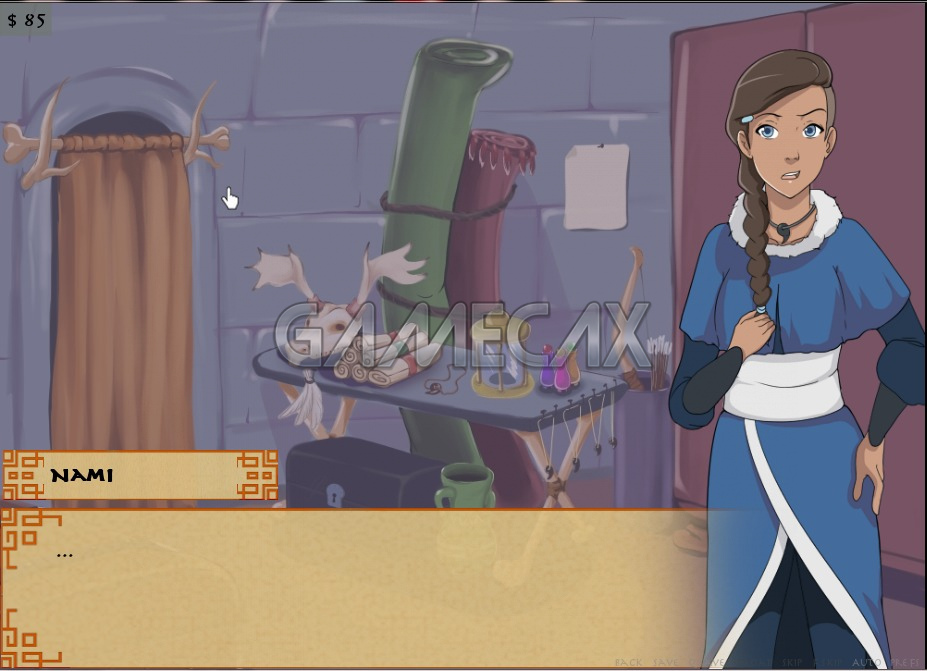
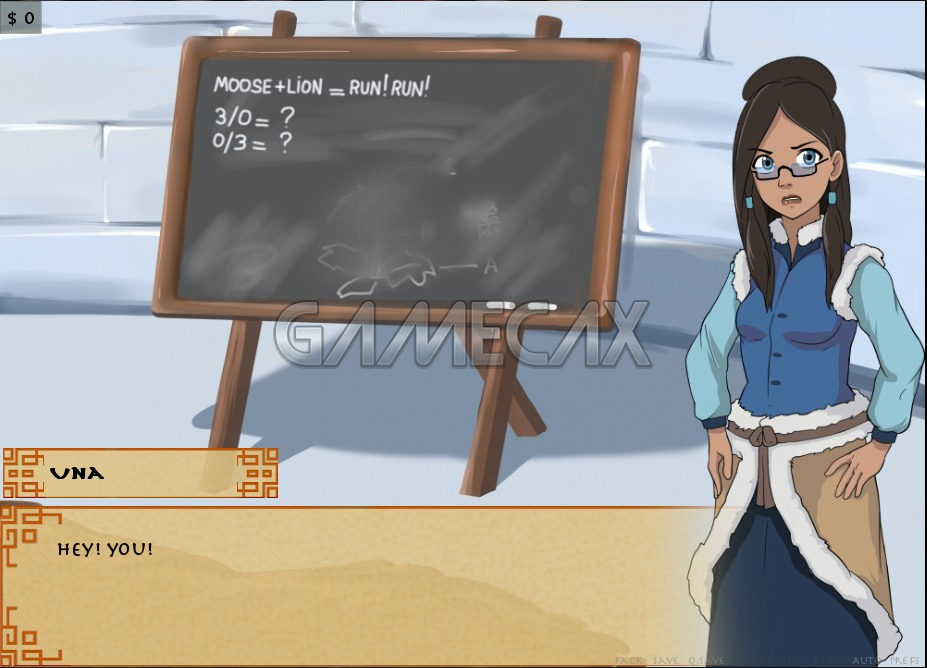
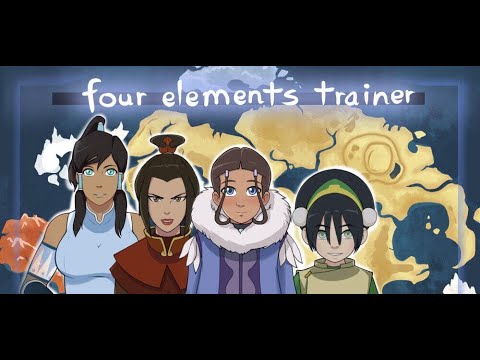
MITY uses a clean 2D cartoon style that immediately communicates the game’s Avatar-inspired identity.
Characters and environments remain visually consistent despite the large amount of content spread across multiple campaigns.
The presentation is particularly effective for a project that depends heavily on recognizable locations and characters.
The Long Development Has Created a Large Amount of Content
Four Elements Trainer has accumulated substantially more systems and story content than its early sandbox structure initially suggests.
Moving through all four books means learning different economies, combat rules, quest dependencies, maps, and route structures.
For players who enjoy long progression games, this quantity is one of its strongest advantages.
It Can Also Be Overwhelming Without a Guide
The same amount of content creates one of the game’s biggest weaknesses.
Players can forget an earlier requirement, miss a quest dependency, spend resources inefficiently, become lost during exploration, or misunderstand what is required to reach another route.
The further the campaign progresses, the more valuable structured walkthrough information becomes.
The Existing GameCax Guide Is Particularly Useful
Four Elements Trainer is a strong candidate for guide-driven internal linking because many of its most common problems have specific solutions.
A useful walkthrough can explain exactly where to earn money, when to train, how combat counters work, which upgrades matter, where Obsidian is located, and what prerequisite is preventing the next event.
This type of information adds significantly more value than simply summarizing the story.
Pros
- Four large campaigns with noticeably different gameplay structures.
- Strong 2D cartoon presentation.
- Large amount of long-form content.
- Meaningful route branches increase replay value.
- Resource management gives daily activities a purpose.
- Training provides RPG-style progression.
- Hunting and combat add interaction beyond dialogue.
- Book 2 introduces tactical unit-counter mechanics.
- Book 3 provides more exploration and navigation challenges.
- Quest dependencies reward learning how systems connect.
- Economy and upgrades create longer-term planning.
- Each book avoids feeling mechanically identical to the previous one.
- Strong walkthrough and guide potential.
Cons
- Progression requirements can become difficult to track.
- Some activities require repetition.
- Players can waste time if they misunderstand the daily routine.
- Several quest dependencies are not immediately obvious.
- Exploration sections can become confusing without directions.
- The large amount of content can be overwhelming for new players.
- Different books require players to relearn some progression systems.
- A walkthrough becomes increasingly useful later in the campaign.
Final Verdict
Four Elements Trainer stands out because MITY does not treat its four-book structure as a simple change of scenery.
Each campaign introduces a different combination of mechanics. Water establishes the sandbox foundation, Fire expands economy and combat, Earth increases the importance of exploration and collectible requirements, while Air emphasizes larger route branches and long-term progression.
This variety gives the game far more mechanical range than a conventional visual novel. Players are constantly moving between storytelling, training, resource management, quests, combat, exploration, and route decisions.
The drawback is that the campaign contains enough dependencies that progression can become difficult to understand. A missing quest, location, resource, upgrade, or repeated interaction can prevent the next objective from appearing even when the player believes they have completed everything relevant.
That complexity makes Four Elements Trainer an especially strong fit for GameCax’s walkthrough content. A guide organized by book, mechanic, quest, requirement, and next step can solve real progression problems while allowing the main download page to remain evergreen.
For players who enjoy long-form sandbox progression and campaigns that continually introduce new mechanics, Four Elements Trainer offers an unusually substantial experience built around four distinct elemental adventures.
| Category | Score |
|---|---|
| Story Structure | 9.0 / 10 |
| Content Depth | 9.4 / 10 |
| Gameplay Variety | 9.0 / 10 |
| Quest Design | 8.6 / 10 |
| Resource Management | 8.7 / 10 |
| Exploration | 8.5 / 10 |
| Art & Presentation | 9.0 / 10 |
| Replay Value | 9.1 / 10 |
| Progression Clarity | 7.7 / 10 |
| Overall | 8.9 / 10 |
Explore More About Four Elements Trainer
How Progression Works in Four Elements Trainer
Four Elements Trainer is divided into four major books, and each book uses a somewhat different progression structure. Instead of applying one universal walkthrough formula to the entire game, players should first identify the current book and then follow the mechanics used by that campaign.
A useful overall progression model is:
Book → Main Objective → Location → Character / Activity → Requirement → Unlock
The exact requirement can involve money, training, quests, exploration, items, route choices, or progress with another character.
Why the Four Books Should Be Treated Separately
Water, Fire, Earth, and Air are more than thematic chapters. Each book changes how the player interacts with the world and what types of objectives become important.
This is why walkthrough instructions should always identify the correct book before explaining a quest or mechanic.
Book 1 Focuses on Daily Sandbox Progression
The first book establishes a relatively open daily routine where players can visit locations, earn money, train, hunt, mine resources, purchase items, and complete quests.
The main progression pattern is:
Daily Activity → Resource / Training → Quest Requirement → New Event
Learning how to use each day efficiently can make the opening campaign considerably easier.
Time Management Is Important in Book 1
Many activities advance the current period of the day, so the order in which they are completed can matter.
If an expected interaction is unavailable, check whether another activity has already advanced time or whether the event needs to be approached during a different part of the daily cycle.
The Marketplace Supports Early Progression
The marketplace is one of the most useful early locations because it connects items, money, and several progression objectives.
Players should avoid treating shops as simple optional menus because purchased items can support later activities and quests.
Early Side Quests Can Improve the Economy
Some optional-looking tasks provide benefits that continue to help the player after the quest itself has been completed.
Completing useful side objectives early can therefore reduce the amount of repetitive money gathering required later.
Mining Provides Repeatable Income
The mine is a repeatable resource activity that can be used when additional money is needed.
Different discoveries have different values, making mining useful when the player needs extra funds for purchases or other progression requirements.
Hunting Combines Resources With Combat
Hunting introduces simple combat encounters while also providing another activity outside the normal story loop.
Preparing healing resources and understanding when to attack or defend makes hunting more reliable than repeatedly choosing the same action.
Training Does Not Solve Every Combat Requirement
Increasing training is useful, but Four Elements Trainer does not always reward endless stat grinding.
Some improvements depend on particular quests, milestones, equipment, or story progression instead of simply reaching a higher training value.
Book 2 Introduces a Different Gameplay Loop
The second book expands the campaign with a larger city-based structure, new economic activities, training objectives, military preparation, and more substantial combat systems.
A useful model is:
Money / Activity → Training / Equipment → Military Progress → Story Event
The Tavern Is More Than a Story Location
The tavern provides activities that interact with the economy and progression of Book 2.
Because several systems are connected, using the tavern efficiently can contribute to later objectives rather than functioning only as optional side content.
Book 2 Combat Uses Unit Counters
Some combat encounters introduce different unit types with strengths and weaknesses against particular opponents.
Understanding these relationships can be more effective than simply using the same unit repeatedly.
The basic logic is:
Enemy Type → Appropriate Counter → Reduced Losses → Easier Progression
The Armory Supports Combat Progression
The armory and related preparation systems help connect the economy with the military side of the campaign.
Players who ignore preparation can make later encounters more difficult than necessary.
Book 3 Places Greater Emphasis on Exploration
The third book changes the rhythm again by placing more importance on quests, navigation, exploration, and collecting important progression resources.
The main structure becomes:
Quest → Location → Exploration → Required Item → Next Objective
Obsidian Is a Major Book 3 Requirement
Obsidian is distributed across multiple activities and locations rather than coming from one simple source.
This means players can complete most of a progression chain but still become blocked because one required piece was overlooked.
How to Troubleshoot Missing Obsidian
If progression requires additional Obsidian, check completed quests, exploration locations, maze objectives, and any activities that may reward a piece.
It is usually more effective to review the different acquisition sources than to repeat one activity indefinitely.
The Maze Requires Navigation Rather Than Statistics
Maze sections are different from normal character progression because increasing money or training does not solve the problem.
The important requirement is understanding the route and locating the correct objective.
This makes the maze one of the areas where a dedicated walkthrough is particularly useful.
Book 4 Places Greater Weight on Branching Routes
The fourth book continues the campaign while making major route selection increasingly important.
Some decisions can affect a substantial portion of later progression rather than changing only one isolated event.
Route Choices Should Be Saved Separately
Players interested in seeing multiple branches should maintain a manual save before major route decisions.
This allows an alternate route to be explored without replaying the entire preceding campaign.
Routes Can Change More Than Dialogue
A major branch can alter the sequence of objectives, character interactions, and later events.
The most useful route model is:
Major Choice → Route State → Route-Specific Objectives → Route Events
Money Has Different Uses Across the Books
Currency remains useful throughout the game, but its purpose changes depending on the current campaign.
It can support items, activities, upgrades, preparation, or quest requirements, so players should avoid spending all available resources unless the next objective is already clear.
Side Quests Often Have Long-Term Benefits
A side quest may provide more than a one-time reward. Some objectives improve access to resources, unlock useful locations, or make later progression easier.
Completing side content before heavy grinding can therefore save time.
Exploration Is Frequently the Missing Requirement
If no obvious character has a new event, another location may contain the next objective.
Four Elements Trainer frequently rewards checking the wider map after completing an important quest or reaching a new stage of progression.
Revisiting Locations Can Reveal New Content
Locations that previously had nothing important can gain new interactions after another requirement has been completed.
Players should therefore occasionally revisit familiar areas instead of assuming that every location becomes irrelevant after its first quest.
Character Progression Can Depend on Other Objectives
A character’s next interaction may be locked behind money, a quest, an item, exploration, or progress elsewhere.
The useful troubleshooting model is:
Previous Event → Main Quest → Side Quest → Required Item / Stat → Location → Character
Why Repeating the Same Character Interaction May Not Help
If nothing changes after several repeated interactions, the missing condition is likely elsewhere.
Check quests, shops, training, exploration, and other locations before continuing to repeat the same action.
Items Can Function as Progression Keys
Some items are more important than ordinary consumables because possessing them can enable another quest or interaction.
Players should therefore avoid judging an item only by its immediate use.
Resource Management Reduces Unnecessary Grinding
Spending carefully is useful because Four Elements Trainer regularly connects resources with progression.
Keeping a reserve of money or important items can help when a new requirement appears unexpectedly.
Minigames Give Each Book More Variety
Hunting, mining, combat, navigation, economic activities, and other small systems help separate Four Elements Trainer from a purely dialogue-driven visual novel.
The mechanics are usually simple individually, but their combination gives each campaign a distinct rhythm.
Why Book-Specific Walkthrough Sections Work Best
A single chronological list can become confusing because the mechanics change substantially between books.
A clearer walkthrough structure is:
Book → Main Quest → Side Quest → Character → Mechanics → Troubleshooting
How to Troubleshoot Book 1 Progression
Check the current time period, available locations, money requirements, training, marketplace objectives, hunting, mining, and incomplete side quests.
If nothing appears to progress, another daily activity may still need to be completed.
How to Troubleshoot Book 2 Progression
Check available city locations, tavern activities, training, equipment, military preparation, and any combat-related objective.
A missing story event can sometimes be caused by an unfinished preparation requirement.
How to Troubleshoot Book 3 Progression
Check current quests, available exploration areas, maze progression, and whether every required Obsidian source has been collected.
This book frequently rewards reviewing exploration progress rather than grinding statistics.
How to Troubleshoot Book 4 Progression
First determine which major route is active. Then follow objectives associated specifically with that route.
Instructions intended for another branch may not apply to the current playthrough.
Keep Saves Before Important Choices
Maintaining multiple saves is especially useful before major route branches and difficult progression sections.
Separate saves also make it easier to test alternative decisions without repeating large portions of a book.
Four Elements Trainer Walkthrough
The existing Four Elements Trainer Guide on GameCax is the best place to organize detailed progression information.
The ideal structure is:
Book → Quest / Character → Requirement → Location → Action → Unlock
Mechanics such as money farming, training, hunting, combat counters, Obsidian collection, maze navigation, and route selection should then be documented inside their relevant book sections.
Image Game Four Elements Trainer [v1.2.1b] [APK]
Other Information Game Four Elements Trainer [v1.2.1b] [APK]
FAQ:
Installation:
ChangeLog:
Note:
Video Game Four Elements Trainer [v1.2.1b] [APK]
Link Download Game Four Elements Trainer [v1.2.1b] [APK]
Comment game Four Elements Trainer [v1.2.1b] [APK]