 0
0


Download game Rick and Morty – A Way Back Home [v4.4] [APK]
IMAGE GAME Rick and Morty – A Way Back Home [v4.4] [APK]
![Rick and Morty – A Way Back Home [v4.4] [APK]](https://i0.wp.com/gamecax.com/wp-content/uploads/2020/02/rick-and-morty-a-way-back-home.jpg?fit=960%2C540&quality=95&strip=all&ssl=1)

Details GameRick and Morty – A Way Back Home [v4.4] [APK]
 Developer: Ferdafs
  Version: 4.4
 Operating system: Windows, Mac, Android, Linux
  Update date: 07/09/2026
 Tags: 2DCG Adult Games, Animated, Blackmail, Footjob, Incest, Male Protagonist Adult Games, Mobile game, Oral Sex Adult Games, Parody, Tit, Urination, Vaginal Sex Adult Games, Voyeurism Categories: Free Sex Games APK for Android – Best Adult Mobile Games (2026), Free Sex Games for iOS & Mac – Adult Games for iPhone, iPad & macOS, Free Sex Games for Linux – Download Adult Games Ubuntu, Free Sex Games for PC – Download Adult Games for Windows, TRENDING
About Game Rick and Morty – A Way Back Home [v4.4] [APK]
Rick And Morty – A Way Back Home [v4.4] [Ferdafs]
This is a visual novel game inspired by the movies Rick and Morty. This is an adult movie this game not only has violence but also strongly embodies adult and sexual themes for age 18+.
Rick and Morty: A Way Back Home is preferred by many as well as the majority of the audience because of the attractiveness and strength of the game with the features and many choices when playing the game Rick and Morty: A Way Back Home. Currently, this game is being popular on Linux, Android, and also on windows operating system.
One of the coolest things about Rick and Morty is how they play with different dimensions and realities. So if you think about it, this game could even be a different universe from the original show. The game does a great job of feeling like a Rick and Morty product, even though it’s unlicensed and never will be.
Rick and Morty: A Way Back Home – Walkthrough
Rick and Morty: A Way Back Home is a parody fan adventure developed by Ferdafs and inspired by the animated Rick and Morty universe. Rather than recreating episodes from the original series, the project builds its own progression structure around recognizable characters, locations, quests, and alternative events.
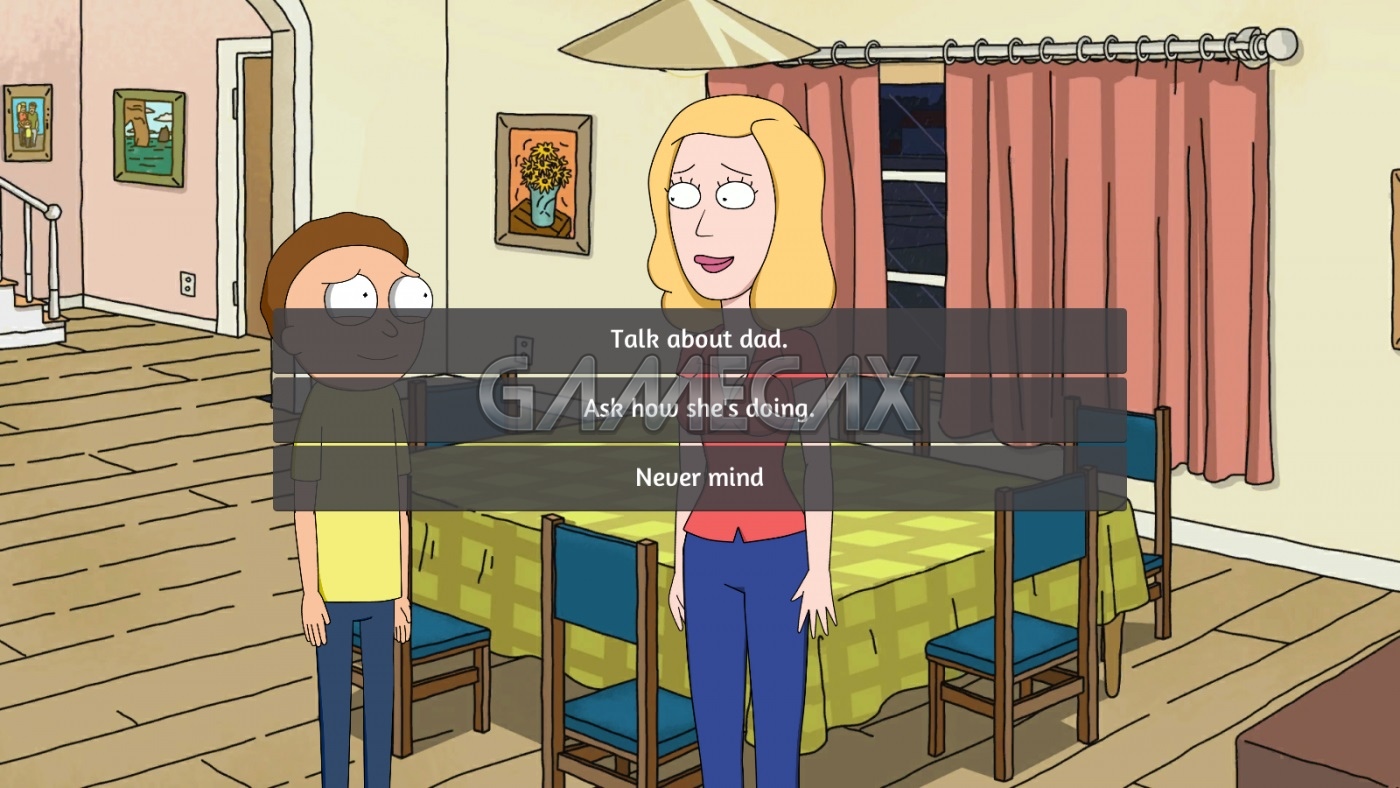
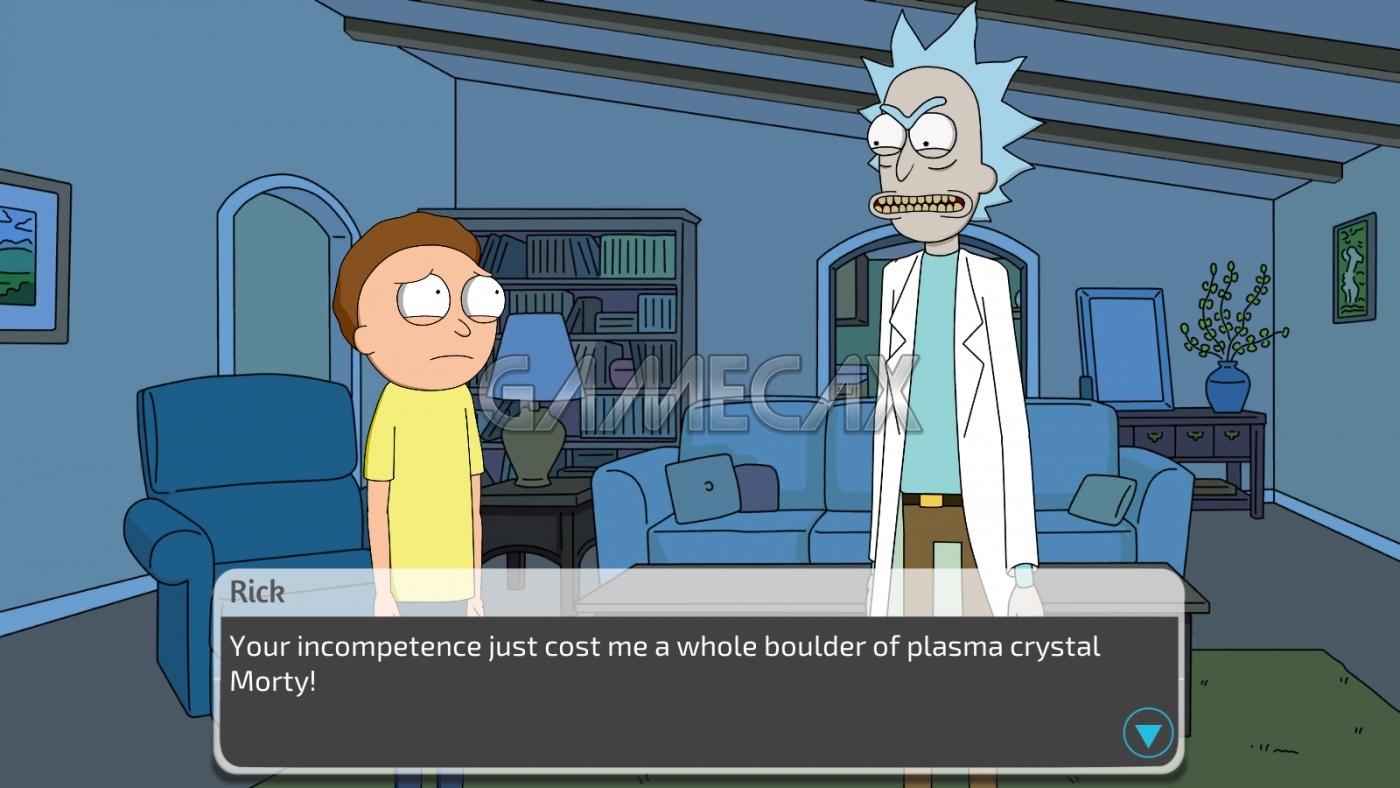
The game is built with Unity and combines visual novel-style storytelling with exploration and objective-based progression. Players move between locations, check the quest log on the in-game phone, interact with relevant characters, and trigger new events after satisfying the required conditions.
The core progression loop can be summarized as:
Check Quest Log → Identify Objective → Visit Character / Location → Trigger Event → Complete Requirement → Unlock Next Quest
This structure makes the quest log especially important. When progression appears to stop, the next step is often connected to a specific location, time period, previous event, or character interaction rather than random exploration.
The game also includes a broader world map that expands progression beyond the Smith household, allowing quests to lead into additional areas and location-specific events.
Because this is an unofficial fan project, its storyline and event structure should be treated as an independent parody continuity rather than part of the official Rick and Morty canon.
Rick and Morty: A Way Back Home Review
A Fan Adventure Built Around Quest Progression
The most important gameplay feature in A Way Back Home is its quest-driven structure.
Instead of presenting every event automatically, the game regularly gives players an objective and expects them to determine where and when that objective can be completed.
The resulting gameplay structure is:
Quest → Requirement → Character / Location → Trigger → New Quest
The Phone Quest Log Is the Main Navigation Tool
Ferdafs specifically recommends checking the phone’s quest log when players are unsure what to do next.
This makes the quest log much more than a simple list of completed objectives. It acts as the primary interface between the story and the game’s exploration systems.
Reading the Quest Description Carefully Matters
When a quest appears blocked, the wording of the current objective is often the best clue about the next required action.
A useful troubleshooting method is:
Current Quest → Identify Character / Action → Determine Location → Check Trigger Condition
Locations Can Directly Trigger Events
Not every new event begins by selecting a dialogue option.
Some progression is activated simply by entering the correct area after the necessary previous conditions have been satisfied.
This produces:
Previous Event → Required Location → Enter Area → New Event
Time Can Be Part of an Event Requirement
Ferdafs has also explicitly noted that certain events activate at a particular time period, including events triggered at night inside the home.
As a result, arriving at the correct location may still not be enough if the required time condition has not been reached.
The Full Dependency Can Include Several Conditions
A more complete progression model is:
Previous Event + Current Quest + Correct Location + Correct Time = New Event
The Smith Home Functions as an Important Hub
The household serves as one of the game’s central progression locations.
Different rooms can become relevant to quests, character interactions, and time-specific events throughout the story.
The Garage Connects Rick to Quest Progression
Rick’s garage is particularly important because conversations there can begin objectives that later continue in completely different locations.
This demonstrates how the game connects dialogue to exploration:
Talk to Character → Receive Objective → Travel → Trigger Event
The Park Is More Than a Background Location
The park is one example of an external area that can become relevant after a previous interaction.
Players therefore need to think about locations as progression nodes rather than simply places to visit.
The World Map Expands the Adventure
The game eventually extends beyond the immediate neighborhood through a broader map structure.
This gives Ferdafs room to introduce additional areas while maintaining the same event-based progression model.
Exploration Works Best When Guided by Quests
Although players can move between locations, randomly checking every available area is inefficient.
The quest log should generally determine where exploration is focused.
Character Events Often Depend on Earlier Objectives
A character may be available for interaction without having a new major event ready.
When this happens, the missing requirement may be another quest or previous storyline event.
Previous Events Create Hidden Progression Flags
Event-based games often record previous actions internally before allowing later content to appear.
The practical player-facing structure is:
Complete Event A → Progress State Changes → Event B Becomes Available
Missing Events Should Be Diagnosed Backward
If an expected event does not appear, start with the desired event and trace its dependencies backward.
Use:
Missing Event → Current Quest → Previous Event → Required Character → Location → Time
The Quest Log Reduces Random Trial and Error
Without an objective system, a game containing many locations and character events could quickly become difficult to navigate.
The phone quest log helps reduce that problem by giving players a reference point whenever several possible activities are available.
Some Objectives Still Require Interpretation
The quest log does not always spell out every trigger in complete detail.
This creates a natural puzzle-solving element where players must connect the objective with the appropriate location or character.
Character and Location Dependencies Are Closely Connected
Many events cannot be understood by looking at characters or locations separately.
The more useful model is:
Character → Quest → Location → Trigger → Result
Some Storylines Can Progress in Parallel
With multiple objectives and character events available, players do not always need to follow one uninterrupted progression chain.
If one quest temporarily appears blocked, another available objective may provide useful progression elsewhere.
The Game Benefits From Familiar Locations and Characters
Players familiar with the source series can quickly recognize much of the setting without needing lengthy introductions.
This allows the fan project to spend more time developing its own quests and alternative situations.
Its Story Should Still Be Treated Independently
Knowing the television series does not reveal how A Way Back Home’s progression system works.
The fan game establishes its own quest dependencies, event order, and location triggers.
The Unity Engine Supports a More Interactive Structure
Using Unity allows the game to combine dialogue sequences with map navigation, quest tracking, time-dependent events, and location-based progression.
This gives A Way Back Home more interaction than a purely linear visual novel.
The Expanding Map Adds Variety
As additional areas become relevant, progression can move between household events, neighborhood locations, and other parts of the game’s world.
This helps prevent every objective from following exactly the same pattern.
Progression Clarity Is the Main Gameplay Challenge
The game does not primarily challenge players through mechanical difficulty.
The main challenge is figuring out which dependency is currently missing.
Players are effectively solving:
What Quest Am I On? → What Happened Previously? → Who Is Relevant? → Where Should I Go? → When Should I Go There?
A Structured Walkthrough Is Particularly Useful
Because events can depend on quests, previous interactions, locations, and time periods, a walkthrough can provide considerably more value than a simple scene list.
The Best Walkthrough Should Be Quest-Based
The primary guide structure should follow the same organization already used by the game:
Quest → Previous Requirement → Character → Location → Time → Trigger → Next Quest
A Location Index Would Add a Second Navigation Layer
Players sometimes know where they are but not which objectives can be completed there.
A useful location index could use:
Location → Relevant Quests → Required Previous Progress → Trigger
A Character Index Would Solve the Opposite Problem
Players searching for a particular character should be able to immediately identify which quests involve them.
Use:
Character → Quest → Location → Requirement → Next Event
Time-Based Events Need Their Own Reference
Because at least some events depend on time, a complete guide should also document whether an objective requires daytime, evening, night, or another specific period.
A Stuck Quest Database Would Provide High Value
The strongest troubleshooting format is not a complete replay of the story but a direct answer to the player’s problem.
Use:
Stuck Quest → Missing Requirement → Character → Location → Time → Trigger
Manual Saves Remain Useful
Keeping several save files makes it easier to recover from progression problems and revisit earlier quest states without replaying large amounts of content.
The Main Strength Is the Interconnected Progression
A Way Back Home works best when quests, characters, locations, and timing combine into a connected progression network.
Each new objective gives familiar environments another potential purpose and encourages players to pay attention to what the quest log is asking them to do.
The Main Weakness Is Progression Ambiguity
The same interconnected structure can become confusing when the next trigger is not obvious.
Players may reach the correct character but miss the required time, reach the correct location before completing the previous event, or search randomly while overlooking the quest log.
Pros
- Recognizable parody setting and characters.
- Quest-driven progression provides more interaction than a completely linear visual novel.
- Phone quest log provides useful guidance.
- Locations have meaningful progression functions.
- Time-based triggers create additional event requirements.
- World map allows progression to expand beyond the central household.
- Unity supports exploration and objective-driven gameplay.
- Multiple progression chains create varied objectives.
- Strong potential for quest-based walkthrough content.
Cons
- The next event trigger can occasionally be difficult to identify.
- Quest descriptions may not reveal every required condition.
- Players can waste time searching locations before completing prerequisite events.
- Time-specific events can be overlooked.
- Managing multiple unfinished objectives may become confusing.
- Random exploration is inefficient when a quest dependency is missing.
Final Verdict
Rick and Morty: A Way Back Home takes a recognizable animated universe and builds an independent fan adventure around quests, exploration, characters, locations, and event dependencies.
Its most useful feature is the quest log, which provides a central reference point for a progression system that can otherwise become difficult to follow. Locations and time periods can both function as event requirements, meaning successful progression depends on understanding more than simply which character to visit.
The game’s strongest progression formula is:
Quest + Previous Event + Character + Location + Time → New Event
That structure also explains why A Way Back Home is particularly suitable for a comprehensive guide. A dependency-based walkthrough could quickly answer why a quest is stuck, where an event begins, and which prerequisite the player is missing.
| Category | Score |
|---|---|
| Fan-Game Concept | 8.8 / 10 |
| Quest System | 8.9 / 10 |
| Exploration & Locations | 8.7 / 10 |
| Progression Structure | 8.8 / 10 |
| Progression Clarity | 8.2 / 10 |
| World Navigation | 8.6 / 10 |
| Gameplay Variety | 8.7 / 10 |
| Walkthrough / Guide Potential | 9.3 / 10 |
| Overall | 8.7 / 10 |
Explore More About Rick and Morty: A Way Back Home
How Progression Works in A Way Back Home
Rick and Morty: A Way Back Home uses a quest-driven progression system where new events can depend on previous objectives, specific characters, locations, items, and time periods.
The most useful progression model is:
Quest → Previous Requirement → Character / Location → Time or Item Requirement → Trigger → Next Quest
Understanding these dependencies is much more efficient than repeatedly exploring every available area.
The Quest Log Should Be Your First Reference
The phone’s quest log is one of the most important tools in the game. When you are unsure what to do next, checking the current objective should be the first troubleshooting step.
A useful workflow is:
Open Quest Log → Identify Objective → Determine Character → Determine Location → Check Additional Requirement
Quest Descriptions Often Contain the Main Clue
Objectives usually indicate the direction of progression even when they do not reveal every exact trigger.
Try breaking the current quest into smaller questions:
- Which character is involved?
- Which location is connected to the objective?
- Does another event need to be completed first?
- Does the event require a particular time?
- Is a specific item or action required?
Previous Events Can Control New Quests
Later events frequently depend on progression flags created by earlier objectives.
This means reaching the correct location may accomplish nothing if the necessary previous event has not yet been completed.
The dependency becomes:
Previous Event → Progress Flag → New Quest / Trigger Available
Locations Can Trigger Events Automatically
Not every event begins through dialogue. Some objectives continue when the player simply reaches or enters the required location after satisfying the necessary prerequisites.
Use:
Complete Previous Objective → Travel to Required Location → Enter Area → Trigger Event
Rick’s Garage Is an Important Progression Location
Rick’s garage frequently functions as more than a background environment. Conversations and objects found there can begin objectives that later require traveling somewhere else.
This creates:
Garage Interaction → Quest Begins → Travel → New Event
The Smith Residence Is a Major Story Hub
The Smith residence contains several rooms and interactions connected to progression. Some events also depend on returning home during a particular time period.
The Park Can Become a Quest Destination
The park demonstrates how a conversation in one location can lead to an event somewhere completely different.
A developer-provided walkthrough has previously used the structure:
Talk to Rick in Garage → Receive Objective → Open World Map → Visit Park → Continue Event
The World Map Connects Separate Progression Areas
The world map allows quests to move beyond the Smith residence and neighborhood.
As the adventure expands, new objectives can require traveling to areas that were previously unrelated to the player’s active storyline.
Space Exploration Expands the Navigation Network
The game eventually introduces additional off-world areas, creating another layer of location-based progression.
This makes the navigation graph broader:
Quest → World Map / Vehicle → Destination → Character or Location Trigger → Next Objective
Vehicles Can Be Part of Travel Progression
Some destinations require using an available vehicle rather than selecting a conventional neighborhood location.
When a quest points toward another world or distant area, check the available travel options around the current hub.
Time Can Be a Hidden Event Requirement
Some character and household events require a specific time period.
If the required character and location appear correct but nothing happens, changing the current time should be one of the next things you investigate.
Night Events Should Be Treated Separately
Several progression chains have historically used nighttime triggers.
The troubleshooting formula becomes:
Previous Event + Correct Character + Correct Location + Nighttime = Event Trigger
Items Can Also Become Progression Requirements
Some quests depend on obtaining or using a specific item before the next event becomes available.
The item may come from a shop, another location, or a previous objective.
Shops Are Part of the Quest Network
Purchasing an item can sometimes unlock progression elsewhere.
This creates:
Quest → Need Item → Shop → Purchase Item → Return to Character / Location → Continue Quest
Money Can Indirectly Block Progress
If a required item must be purchased, the real progression bottleneck may be earning enough money rather than finding another character.
Whenever a quest involves a shop item, make sure the required funds are available first.
Character Conversations Can Begin New Objectives
Talking to the correct character remains one of the most common ways to start a quest.
However, the conversation itself may only provide the objective. The actual event can happen somewhere else.
A Character Does Not Need to Be the Final Trigger
This distinction is important:
Character Starts Quest ≠ Character Triggers Final Event
The next step may instead require a location, object, item, or time condition.
Parallel Quests Can Exist at the Same Time
Players may have several objectives available simultaneously.
If one quest cannot immediately continue, progressing another objective can be more productive than repeatedly testing the same trigger.
The Best Progression Strategy Is Quest-First
Instead of exploring randomly, prioritize objectives in this order:
Quest Log → Requirement → Location / Character → Additional Condition → Trigger
Start Troubleshooting With the Last Completed Quest
When progression stops, identify exactly what you completed immediately before the problem appeared.
This provides the strongest clue about which new progression flag should now be active.
Missing Events Should Be Traced Backward
Reverse lookup is particularly effective in A Way Back Home:
Missing Event → Current Quest → Previous Event → Character → Location → Time / Item → Trigger
If the Character Is Present but Nothing Happens
Check whether the required previous quest has been completed and whether another condition such as time or an item is missing.
If the Character Is Missing
Confirm that you are visiting the correct location and that the current storyline has progressed far enough for that character interaction to become available.
If the Correct Location Does Nothing
The location itself may be correct while the progression state is wrong.
Work backward:
Location → Required Quest → Previous Event → Missing Requirement
If the Quest Log Does Not Seem to Advance
Review the objective carefully and determine whether the game expects another interaction before updating the quest state.
Some progression chains contain intermediate triggers between major quest-log updates.
World Map Problems Are Usually Destination Problems
If an objective clearly points away from the current hub, check whether the required destination appears on the world map or requires another method of transportation.
Save Before Testing Different Progression Options
Maintaining multiple manual saves makes it easier to test alternative actions without losing a useful progression checkpoint.
Quest-Based Saves Are Particularly Useful
A practical save structure is:
Before Quest → Before Important Trigger → After Quest Completion
A Complete Walkthrough Should Be Organized by Quests
A chronological walkthrough is useful for players starting from the beginning, but the game’s quest system provides a stronger navigation structure.
Each guide entry should contain:
Quest → Previous Requirement → Character → Location → Time / Item → Trigger → Result
A Character Index Provides a Second Navigation Method
Players who remember the character but not the quest name should be able to search:
Character → Related Quests → Required Locations → Progression Requirements
A Location Index Adds Another Useful Lookup
A location-based section can answer:
Location → Available Quests → Characters → Required Previous Progress
A Time-Based Event Index Can Prevent Repeated Searches
Events with time restrictions should be indexed separately so players can quickly identify which objectives require a particular period.
An Item Requirement Index Would Solve Another Common Problem
When an event depends on a purchased or acquired item, the guide should document both where the item comes from and which quest consumes or uses it.
Use:
Item → Where to Obtain → Cost / Requirement → Related Quest → Result
A Stuck Quest Solver Would Provide the Most Value
The strongest walkthrough feature would allow players to start from the objective they cannot complete.
The solver should follow:
Stuck Quest → Last Completed Quest → Missing Character / Location / Time / Item → Exact Trigger
The Game’s Progression Is a Dependency Network
Rather than thinking about A Way Back Home as one continuous sequence, it is more useful to view its progression as interconnected requirements.
The complete graph is:
Previous Event → Quest → Character → Location → Time / Item → Trigger → Next Event
Understanding That Graph Makes Progression Much Easier
Once players stop searching randomly and begin identifying dependencies, most progression problems become easier to diagnose.
Image Game Rick and Morty – A Way Back Home [v4.4] [APK]


Other Information Game Rick and Morty – A Way Back Home [v4.4] [APK]
FAQ:
Installation:
ChangeLog:
Note:
Video Game Rick and Morty – A Way Back Home [v4.4] [APK]

Link Download Game Rick and Morty – A Way Back Home [v4.4] [APK]
 OS: Windows
 OS: IOS
 OS: Android
 OS: Linux
Comment game Rick and Morty – A Way Back Home [v4.4] [APK]


![Inside The Griffins [v0.1] [APK]](https://i0.wp.com/gamecax.com/wp-content/uploads/2026/10/inside-the-griffins.jpg?resize=128%2C72&quality=95&strip=all&ssl=1)
![The Home of Pleasure [Ep.3 P3 v0.3.3] [APK]](https://i0.wp.com/gamecax.com/wp-content/uploads/2026/10/the-home-of-pleasure.jpg?resize=128%2C24&quality=95&strip=all&ssl=1)
![Jack Hunter [v0.4] [APK]](https://i0.wp.com/gamecax.com/wp-content/uploads/2026/09/jack-hunter-3.jpg?resize=128%2C72&quality=95&strip=all&ssl=1)
![Eclipsis [Ep.3] [APK]](https://i0.wp.com/gamecax.com/wp-content/uploads/2026/10/eclipsis.jpg?resize=128%2C72&quality=95&strip=all&ssl=1)
![Two Heroes and a Burden [v0.2] [APK]](https://i0.wp.com/gamecax.com/wp-content/uploads/2026/06/two-heroes-and-a-burden.jpeg?resize=128%2C72&quality=95&strip=all&ssl=1)
![Firebreak [v0.1b] [APK]](https://i0.wp.com/gamecax.com/wp-content/uploads/2026/10/firebreak-4.jpg?resize=128%2C32&quality=95&strip=all&ssl=1)
![Waifu Academy [v0.13.5] [APK]](https://i0.wp.com/gamecax.com/wp-content/uploads/2024/01/waifu-academy-1-1.jpg?fit=1600%2C400&quality=95&strip=all&ssl=1)