

Download Adult Games - Sex Games
Hentai games for Android (APK), PC & Mac - GameCax
Home » Games » Tales of Androgyny [v0.3.72.1] [APK]

Download game Tales of Androgyny [v0.3.72.1] [APK]

IMAGE GAME Tales of Androgyny [v0.3.72.1] [APK]

Tales of Androgyny [v0.3.72.1] [APK]
Update

ADS 2026

Icon Info Details GameTales of Androgyny [v0.3.72.1] [APK]

  • Tác giả Developer: The Majalis Duo
  • Phiên bản Version: 0.3.72.1
  • Hệ điều hành Operating system: Windows, Mac, Linux, Android, Java
  • Ngày cập nhật Update date: 07/09/2026

About Game Tales of Androgyny [v0.3.72.1] [APK]

Article content

Tales of Androgyny [v0.3.72.1] [Majalis]

Hi there! This is a lewd game featuring characters with androgynous features, some male, some female, some… slime? You play as a feminine guy that looks like a gal, and you do lewd things with guys, gals, monster guys, monster gals, and… slimes? It’s a stance-based RPG with rogue-lite elements and a frankly suspicious number of phallus(es? odes?) written, drawn, and programmed by us, the Majalis team, consisting of two programmers, one artist, one writer – making in all, two! It’s a custom built game using libgdx.

Tales Of Androgyny is an adult game 18 years and over that is erotic / lewd / arousing with sexy, male, female, and semen slime characters. You will become a girly boy who looks like a girl doing lewd things to girls, boys, monsters,… slime. Tales Of Androgyny is in the alpha release stage and now we have all versions for window, android, mac, linux….

Scene Guide to 0.2.07.5

Tales of Androgyny is a fantasy role-playing game developed by Majalis, combining stance-based combat with roguelite exploration, character customization, equipment, skills, perks, quests, random encounters, and branching decisions.

Rather than functioning primarily as a visual novel, the game is structured around building a character and taking that character through a world filled with combat encounters, NPC events, towns, loot, quests, and other discoveries.

Character creation is an important part of the experience. Players can develop different combinations of attributes, combat abilities, perks, magic, and equipment, allowing the same encounter to be approached differently depending on the current build.

The world map adds another strategic layer. Moving through the map means deciding which locations to investigate, which encounters are worth accepting, and how available resources should be managed before reaching more difficult areas.

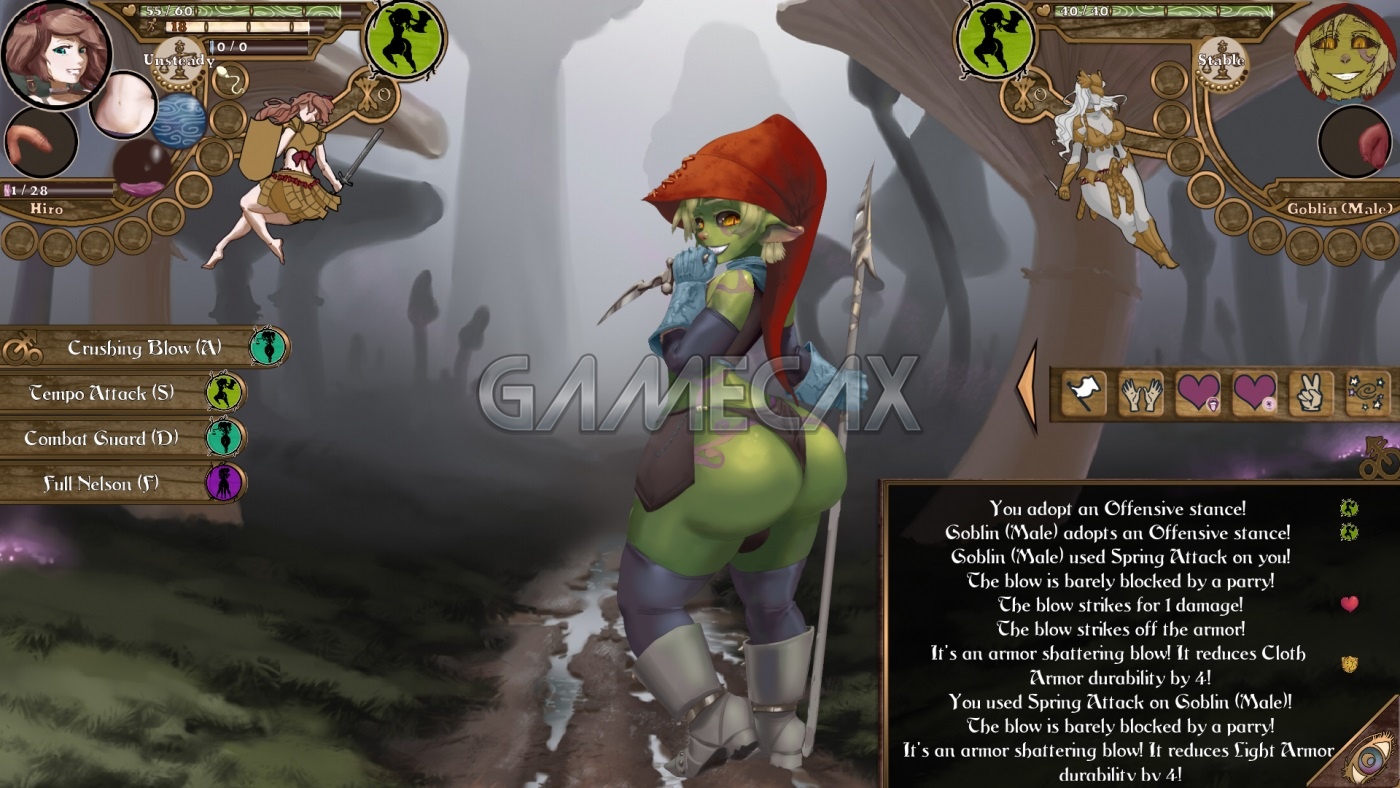
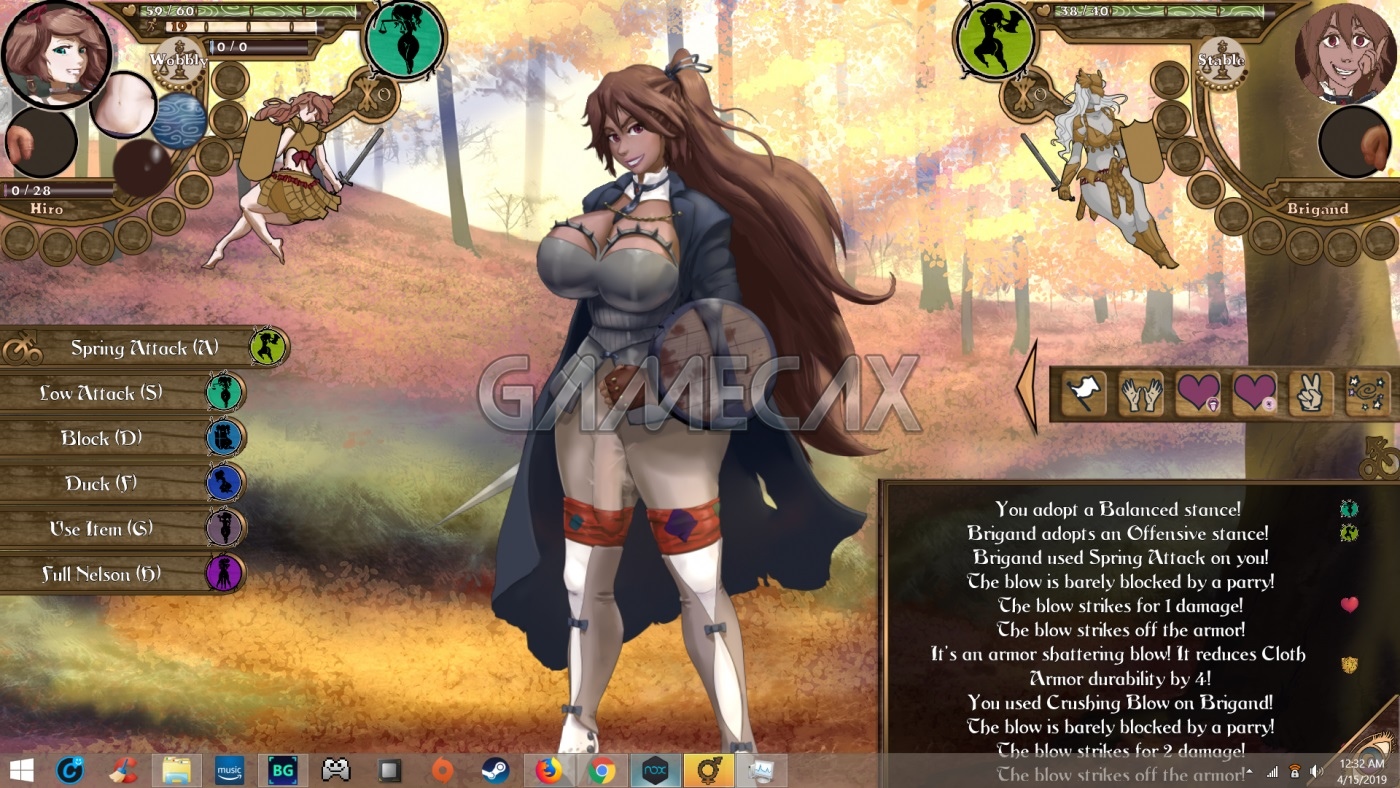
Combat is one of the game’s defining mechanics. Instead of using a simple attack-and-defend loop, Tales of Androgyny uses multiple stances and techniques. Available actions can change according to positioning, character abilities, equipment, and the current state of the battle.

The overall gameplay loop can be understood as:

Build Character → Explore Map → Encounter → Choose Strategy → Gain Resources / Experience → Improve Build → Explore Further

This combination of character building and encounter variety gives Tales of Androgyny considerably more mechanical depth than a conventional choice-based visual novel.

The game is available for desktop platforms and Android. Players looking for similar releases can browse more PC Adult Games or Android Adult Games on GameCax.

Tales of Androgyny Review

Tales of Androgyny Is Fundamentally an RPG

The most important thing to understand about Tales of Androgyny is that its gameplay systems are not merely decoration around a visual novel.

Character attributes, abilities, equipment, perks, exploration decisions, and combat strategy all influence how successfully a run develops.

Players who enjoy experimenting with RPG systems therefore have considerably more to work with than a straightforward dialogue-driven game.

Character Creation Determines How a Run Begins

Building the protagonist establishes the foundation for later encounters.

Different attributes and abilities can make certain strategies easier while leaving weaknesses elsewhere.

This means character creation should be treated as the first strategic decision rather than only a cosmetic screen.

Build Variety Encourages Experimentation

The game offers several ways to specialize a character through skills, perks, spells, statistics, and equipment.

A player can therefore create different approaches instead of following one universally correct build.

The basic progression relationship is:

Attributes → Skills / Perks → Combat Options → Encounter Strategy

Perks Can Change More Than Raw Statistics

Perks are particularly interesting because they can modify how a character behaves within the wider RPG system rather than providing only straightforward numerical increases.

This makes build planning more meaningful and creates reasons to experiment with different combinations across multiple runs.

Skills Are Connected to Combat Stances

Combat techniques are organized around different stances, meaning that the actions available at any moment depend partly on the protagonist’s current position and tactical state.

Understanding which techniques belong to each stance is therefore important when building a reliable combat strategy.

Stances Give Combat Its Identity

The stance system is one of the features that separates Tales of Androgyny from simpler turn-based RPGs.

Changing position can open one set of techniques while removing access to another.

This produces a combat loop closer to:

Current Stance → Available Technique → Enemy Response → New Battle State → Next Stance

Combat Is About Controlling the Battle State

Successful encounters require more than repeatedly selecting the strongest attack.

Players need to consider health, stamina, positioning, defensive states, available techniques, equipment, and enemy behavior.

This makes understanding the battle state more valuable than relying on one action for every opponent.

Different Enemies Reward Different Strategies

The world contains many types of opponents with their own behaviors and encounter conditions.

A strategy that works efficiently against one enemy may perform poorly against another.

This encourages players to learn encounters instead of treating every battle as an identical statistics check.

Equipment Adds Another Layer to Character Builds

Equipment influences combat performance and resource planning.

Armor and other items can help a build survive difficult encounters, but equipment condition and available resources still need to be considered during longer journeys.

Items Can Solve Specific Combat Problems

Consumable and utility items provide additional tactical options when ordinary techniques are inefficient.

This gives inventory preparation a practical role and rewards players who plan before entering more dangerous areas.

The World Map Creates the Roguelite Structure

Outside combat, players navigate a world containing encounters, locations, loot opportunities, NPC events, and other points of interest.

The map turns exploration into a strategic decision because each movement can bring another opportunity or another threat.

Exploration Is Closely Connected to Character Growth

Moving through the world is how players discover many of the resources and encounters required to improve their character.

The core progression loop therefore becomes:

Explore → Encounter → Reward → Character Growth → Reach New Area

Scouting Helps Players Evaluate the Map

Information about upcoming areas can be valuable because not every encounter is equally desirable for every build.

Better awareness of the map allows players to make more informed decisions about which path to follow.

Resource Management Matters During Longer Runs

Health, stamina, equipment, items, and other resources become more important when several encounters must be completed before reaching safety.

Winning one battle inefficiently can make the next encounter considerably harder.

Not Every Encounter Needs the Same Approach

Some situations can involve skill checks or alternative ways to resolve the encounter.

A strong character build therefore provides advantages outside straightforward combat as well.

This creates another useful dependency:

Character Build → Encounter Options → Resolution → Reward / Consequence

Quests Give Exploration More Direction

The world is not simply a collection of random battles.

Questlines and recurring characters provide objectives that encourage players to visit particular locations and investigate specific encounters.

This helps connect the roguelite map with more persistent character and story progression.

Recurring Characters Make the World More Memorable

Many encounters involve recognizable characters rather than anonymous enemies.

Meeting those characters again under different circumstances gives exploration more personality and makes individual encounters easier to remember.

Companions Add Another Progression Layer

Companion-related content provides additional objectives beyond simply reaching the end of the map.

Players interested in completion can therefore pursue character interactions, quests, and companion activities alongside ordinary combat progression.

Adventure Mode Emphasizes Exploration

Adventure-style play represents the game’s broader roguelite experience, placing greater emphasis on exploring the map, developing a build, discovering encounters, and completing questlines.

This is where the interaction between character building and randomized exploration becomes especially important.

Story Mode Uses the Same Systems Differently

Story-oriented progression uses many of the same underlying combat mechanics but places them inside a more structured journey.

Resources and character-development decisions become especially important when the player cannot simply rely on unlimited repeatable encounters to compensate for inefficient choices.

Time Can Become a Strategic Resource

Some structured progression can change according to how much in-game time has passed.

This means route planning is not always about surviving the next battle. Players may also need to consider whether unnecessary travel or missed opportunities will make later objectives more difficult.

Character Builds Matter More When Resources Are Limited

A flexible build can recover from inefficient decisions during open exploration, but limited-resource scenarios punish weaknesses more heavily.

This makes understanding attributes, perks, equipment, and combat techniques particularly valuable for challenging progression.

Failure Is Part of the Roguelite Experience

Tales of Androgyny is designed around experimentation, and unsuccessful runs can still teach the player how a particular enemy, route, or build works.

Learning which decisions created the problem makes the next attempt more efficient.

There Is More Than One Completion Goal

Reaching a major objective is only one way to approach the game.

Players can also explore questlines, character encounters, companion content, alternative events, and different character builds.

This gives the game considerably more replay value than a single linear campaign.

Build Optimization Has Strong Walkthrough Potential

A useful Tales of Androgyny guide should not simply tell players where to click next.

It should explain how attributes, perks, skills, stances, equipment, and encounter requirements interact.

A good build guide would follow:

Build Goal → Attributes → Skills / Perks → Equipment → Combat Strategy

Enemy Guides Should Explain Mechanics Rather Than Only Solutions

Because enemies behave differently, individual encounter guides can provide meaningful information about preparation and strategy.

The most useful structure is:

Enemy → Threat → Relevant Stance / Skill → Resource Requirement → Strategy

A World Map Guide Can Reduce Failed Runs

Route planning is another area where a walkthrough can provide significant value.

Explaining important locations, quest dependencies, dangerous encounters, and preparation requirements can help players avoid wasting resources before difficult sections.

The Depth Can Be Overwhelming for New Players

The disadvantage of having multiple interconnected systems is that the game does not have the immediate simplicity of a conventional visual novel.

New players need to understand character creation, stances, skills, perks, equipment, resources, and exploration at roughly the same time.

The Interface Requires Players to Learn Several Systems

Many useful options are distributed across character, equipment, skill, combat, and map interfaces.

Once those systems become familiar the game becomes much easier to read, but the initial learning curve is noticeable.

The Art and Animation Give Encounters a Distinct Identity

Tales of Androgyny combines illustrated character art with animated assets, helping individual creatures and recurring characters remain visually recognizable.

The presentation works particularly well with the encounter-focused structure because each new area can introduce a visually distinct opponent or character.

Replay Value Is One of the Game’s Biggest Strengths

Different builds, map routes, quests, companions, encounters, and character-development decisions create multiple reasons to begin another run.

The game therefore benefits from experimentation in a way that a strictly linear visual novel usually cannot.

Pros

  • Deep stance-based combat system.
  • Meaningful character customization.
  • Large selection of skills and perks.
  • Build choices affect encounter strategy.
  • Roguelite world exploration provides replay value.
  • Different enemies encourage different approaches.
  • Equipment and resources matter during longer journeys.
  • Questlines provide direction beyond random encounters.
  • Recurring characters make exploration more memorable.
  • Multiple progression goals encourage additional runs.
  • Available on Windows, Mac, Linux, and Android.
  • Strong potential for build, combat, map, and walkthrough content.

Cons

  • Steeper learning curve than a conventional visual novel.
  • Several interconnected systems need to be understood early.
  • Poor build decisions can make later encounters significantly harder.
  • Resource management can punish inefficient combat.
  • The amount of skills, perks, stances, and encounter mechanics can initially feel overwhelming.
  • Players interested only in linear storytelling may find the RPG systems demanding.

Final Verdict

Tales of Androgyny stands out because it treats its RPG mechanics as a central part of the experience rather than secondary features attached to a visual novel.

Character creation, stance-based combat, skills, perks, equipment, world exploration, quests, and resource management all contribute to how a run develops.

The strongest aspect of the game is the interaction between these systems. A character build affects available combat strategies, combat performance affects remaining resources, and those resources influence how safely the player can continue exploring the map.

This creates a satisfying loop where understanding the mechanics produces noticeable improvements between runs.

The trade-off is complexity. New players have considerably more to learn than they would in a straightforward choice-driven visual novel, and inefficient builds can make progression difficult.

For players who enjoy experimenting with character builds, tactical turn-based encounters, exploration, and roguelite progression, Tales of Androgyny offers substantially more mechanical depth than most games in its niche.

Category Score
RPG Systems 9.2 / 10
Combat Depth 9.1 / 10
Character Customization 9.0 / 10
Build Variety 9.1 / 10
Exploration 8.8 / 10
Quest Design 8.6 / 10
Art & Presentation 9.0 / 10
Replay Value 9.3 / 10
Accessibility 7.8 / 10
Overall 9.0 / 10


Explore More About Tales of Androgyny

How Progression Works in Tales of Androgyny

Tales of Androgyny combines character building, tactical combat, world exploration, equipment, perks, quests, encounters, and route planning into one interconnected RPG loop.

The core progression model is:

Build Character → Explore → Encounter → Spend Resources → Gain Rewards → Improve Build → Reach New Areas

Understanding how these systems influence one another is more useful than treating exploration, combat, and character progression as separate mechanics.

Character Creation Shapes the Entire Run

The decisions made while building the protagonist affect which combat options feel reliable later.

Attributes, skills, perks, equipment, and special abilities determine what strategies are available and how efficiently different enemies can be handled.

Builds Should Be Designed Around a Goal

A strong build works best when the player decides what it is supposed to accomplish before investing in every available option.

A practical planning structure is:

Build Goal → Attributes → Skills → Perks → Equipment → Combat Strategy

Attributes Form the Foundation of the Build

Attributes influence the protagonist’s broader capabilities and support the skills and techniques used later.

Players should consider how each attribute contributes to the intended combat style rather than spreading resources without a clear purpose.

Skills Expand Available Combat Options

Skills provide techniques and abilities that become useful under particular combat conditions.

Because the battle system depends on stance and positioning, a skill can be extremely useful in one situation while unavailable or inefficient in another.

Perks Can Define a Playstyle

Perks add another layer of specialization by modifying how the protagonist performs within the RPG systems.

Combining perks that support the same overall strategy is usually more effective than selecting unrelated bonuses simply because they are individually attractive.

Stances Determine Which Techniques Are Available

The stance system is central to Tales of Androgyny combat.

The current battle position influences which techniques can be used, making combat partly about reaching and maintaining favorable states.

The basic loop is:

Current Stance → Available Technique → Enemy Response → New Position → Next Decision

Combat Is a State-Control Problem

Players should think beyond individual attacks and consider what each action does to the wider battle state.

A move can be valuable because it improves positioning, protects resources, creates access to another technique, or prevents the opponent from establishing a stronger position.

Enemy Knowledge Is Part of Character Progression

Learning how a particular opponent behaves can be just as important as increasing raw character power.

Repeated encounters become easier when the player understands which enemy actions are dangerous and which stances or abilities respond effectively to them.

Different Enemies Reward Different Builds

No single combat strategy is equally efficient against every opponent.

Some builds may perform extremely well against one type of encounter while struggling against another, encouraging experimentation with equipment, skills, and tactics.

Stamina Should Be Managed Across the Entire Encounter

Spending too many resources early can leave the protagonist without enough options when the battle becomes more dangerous.

Efficient combat therefore means balancing immediate advantage with the ability to continue acting later.

Health Is Not the Only Resource That Matters

A character can survive an encounter and still leave it in a poor position for the rest of the journey.

Stamina, equipment condition, consumables, and other resources should be considered when deciding whether a victory was actually efficient.

Equipment Should Support the Build

Equipment is most useful when it reinforces the strategy chosen through attributes, perks, and skills.

The best item is not always the one with the highest isolated value if another option improves the build’s most important combat interaction.

Equipment Condition Can Affect Longer Journeys

Equipment management becomes more important when several encounters must be completed before reaching another safe opportunity to recover or reorganize.

This makes preparation particularly valuable before exploring dangerous routes.

Consumables Can Compensate for Build Weaknesses

Items provide tactical flexibility when the protagonist encounters a situation that the current build does not handle efficiently.

Saving useful consumables for difficult or unfavorable encounters can be more valuable than spending them whenever they become available.

The World Map Is a Strategic Layer

Exploration is not simply movement between story scenes.

Each route can introduce different encounters, rewards, locations, and resource costs, making path selection part of the broader RPG strategy.

Scouting Helps Reduce Unnecessary Risk

Information about upcoming locations can help the player decide whether the current build and remaining resources are suitable for a particular route.

Better information allows dangerous encounters to be avoided or approached with more appropriate preparation.

Route Planning Can Be as Important as Combat Skill

A player who wins every individual battle inefficiently may still fail a longer journey.

Planning routes around recovery opportunities, quest objectives, valuable encounters, and current resources can produce better results than simply taking the shortest visible path.

Exploration Creates a Risk-versus-Reward Decision

Investigating more locations can provide useful rewards, but each additional encounter also creates another opportunity to lose health, stamina, equipment condition, or valuable items.

This creates the loop:

Explore More → Potential Reward → Additional Risk → Remaining Resources → Continue or Retreat

Quests Give Purpose to Exploration

Questlines connect world navigation with longer-term objectives.

Instead of exploring only for random rewards, players can pursue specific characters, destinations, encounters, or tasks that contribute to persistent progression.

Some Encounters Depend on Character Build

A strong RPG system allows character development to affect more than direct combat.

Different attributes or abilities can influence the options available during certain encounters, making build decisions relevant across multiple systems.

Recurring Characters Reward Map Knowledge

Characters encountered in different locations become easier to track once the player understands how the world is organized.

This encourages players to remember routes and locations rather than treating each map node as an isolated random event.

Companion Content Adds Completion Goals

Companions and recurring character interactions create objectives beyond basic survival or combat progression.

Completion-focused players therefore have reasons to explore routes and events that may not be required for the fastest possible run.

Adventure-Oriented Play Emphasizes Build Experimentation

Open exploration provides more opportunities to test different character builds, investigate encounters, and learn the game’s systems.

This makes it a useful environment for understanding combat interactions before attempting more constrained progression.

Structured Progression Rewards Efficiency

When resources, travel, or progression opportunities are more limited, inefficient decisions become more costly.

A build that works casually during open exploration may require refinement when the player must complete several objectives with fewer opportunities to recover.

Time Can Affect Route Planning

When progression is connected to in-game time, unnecessary movement can become a strategic cost.

This means players should sometimes optimize not only for combat survival but also for how efficiently they move between objectives.

Failure Provides Useful Information

A failed encounter or unsuccessful route can still reveal which part of the build or strategy needs improvement.

The important troubleshooting question is not only “Why did I lose?” but:

Was the problem Build, Equipment, Resource Management, Route Choice, or Combat Strategy?

How to Troubleshoot a Weak Build

Identify which encounters consistently cause problems and determine whether the issue comes from insufficient attributes, missing skills, poor perk synergy, or equipment that does not support the intended strategy.

How to Troubleshoot Combat Problems

Use this order:

Enemy Behavior → Current Stance → Available Techniques → Stamina → Equipment → Alternative Strategy

How to Troubleshoot Resource Problems

If the protagonist regularly reaches later areas with too few resources, review earlier encounters and route choices.

The problem may be excessive resource spending rather than insufficient character power.

How to Troubleshoot Exploration Problems

Check whether the current route is unnecessarily dangerous or whether another path provides better access to quests, recovery, equipment, or easier encounters.

How to Prepare for a Difficult Enemy

A useful preparation structure is:

Identify Enemy → Understand Threat → Select Relevant Skills → Equip Appropriate Gear → Preserve Required Resources → Enter Encounter

Build Guides Should Explain Synergy

A useful build guide should explain why certain attributes, perks, skills, and equipment work together rather than simply presenting a list of recommended selections.

This allows players to adapt the build when a specific option is unavailable or when they prefer a different strategy.

Enemy Guides Should Explain the Battle State

Enemy walkthroughs should identify dangerous positions, common responses, and which techniques help the player regain control.

The ideal format is:

Enemy → Threat → Dangerous State → Counter Strategy → Resource Consideration

A World Map Guide Should Track Risk and Reward

A map guide becomes more useful when it explains what each route provides and what preparation is recommended before taking it.

This can include quest access, difficult encounters, useful resources, and nearby recovery opportunities.

Keep Multiple Saves Before Major Build Decisions

Separate saves make it easier to experiment with different character-development choices without losing a successful progression path.

This is particularly useful when comparing perks, equipment setups, or route strategies.

Tales of Androgyny Walkthrough

A comprehensive Tales of Androgyny walkthrough should be organized around systems rather than only chronological events.

The strongest structure is:

Build → Route → Encounter → Strategy → Reward → Next Requirement

Supporting sections for builds, perks, stances, enemies, quests, companions, and the world map can then connect back to the main walkthrough.


Image Game Tales of Androgyny [v0.3.72.1] [APK]

tales-of-androgyny-1
tales-of-androgyny-2

Other Information Game Tales of Androgyny [v0.3.72.1] [APK]

FAQ:

Installation:

ChangeLog:

Note:

Video Game Tales of Androgyny [v0.3.72.1] [APK]

Link Download Game Tales of Androgyny [v0.3.72.1] [APK]

WindowsOS: Windows
Version: 0.3.49.4
MacOS: IOS
Version: 0.3.49.4
AndroidOS: Android
Version: 0.3.72.1
LinuxOS: Linux
Version: 0.3.49.4
OS: Java
Version: 0.3.72.1

Rating game Tales of Androgyny [v0.3.72.1] [APK]

There are no reviews for this article yet.

Please log in to submit a review.

Comment game Tales of Androgyny [v0.3.72.1] [APK]

Subscribe
Notify of
guest

0 Comments
Oldest
Newest Most Voted